
Auto-published by Growwh – a smarter way to scale content and marketing. Want to know more? Chat with us.
TL;DR: ED has attached Rs 100 crore of Amrapali-linked Mauria Udyog properties, taking total attachments to Rs 303 crore after probe traced Rs 110.39 crore diverted from homebuyers. Homebuyers, especially NRIs, must preserve records and pursue legal remedies promptly.
Overview: ED Attachment in the Amrapali Money-Laundering Probe
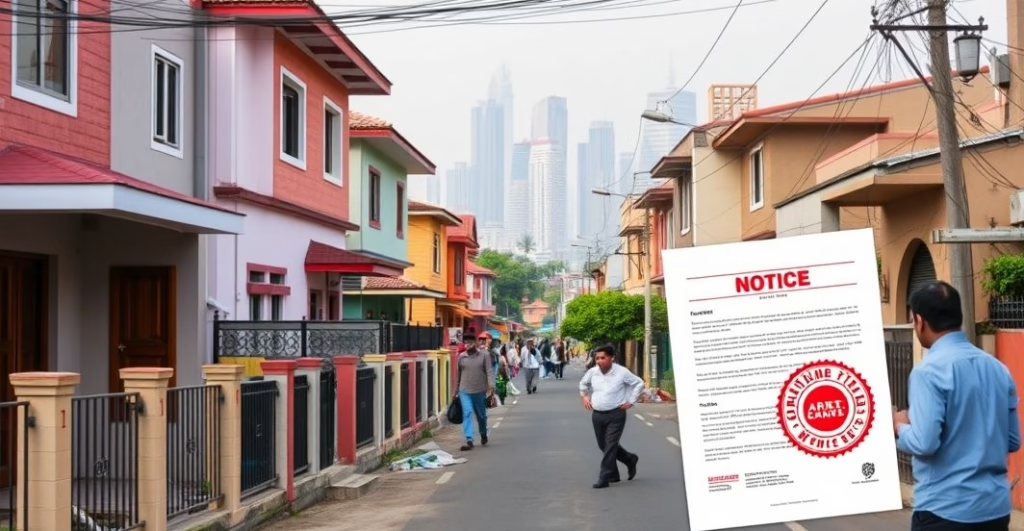
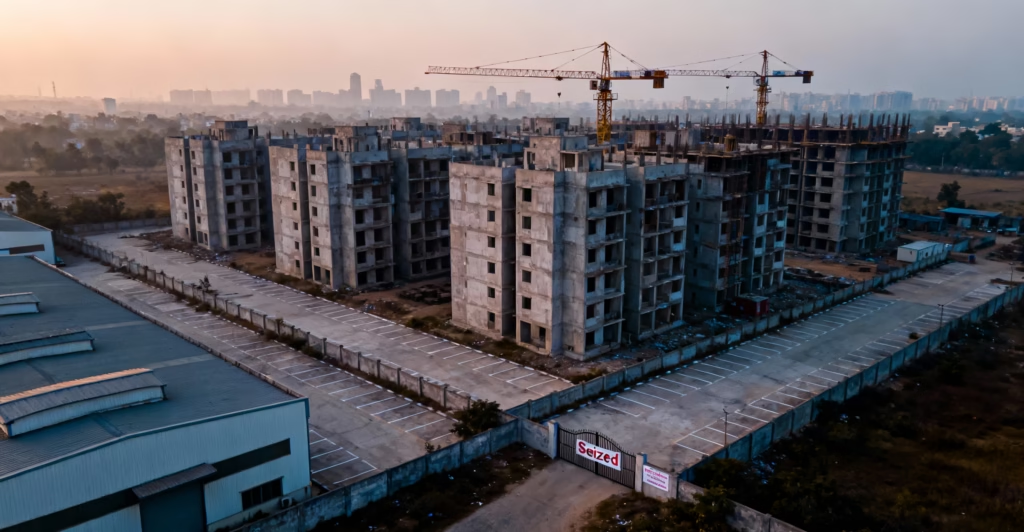
The Enforcement Directorate (ED) has provisionally attached immovable properties worth approximately Rs 100 crore belonging to Mauria Udyog, an entity linked to the Amrapali Group, under the Prevention of Money Laundering Act (PMLA). This action follows findings that funds collected from homebuyers were diverted through shell companies and bogus suppliers. With this order, the total value of properties attached in the ongoing investigation has risen to around Rs 303 crore.
What the ED Alleges: Diversion of Homebuyers’ Funds
Investigators say Amrapali promoters and associated directors routed homebuyer payments through a web of entities, including Mauria Udyog and Jotindra Steel & Tubes. The probe established that at least Rs 110.39 crore was diverted to Mauria Udyog. Since the primary proceeds of crime were not available for direct attachment, the ED acted on the legal principle of attaching assets equivalent to the ‘value thereof’ under the PMLA.
Legal and Criminal Actions Underway
The case stems from multiple FIRs and a 2019 Supreme Court order lodged by aggrieved homebuyers. Several senior executives, auditors and directors have already been arrested and multiple prosecution complaints filed against dozens of individuals and entities. The ED’s provisional attachment is a civil measure to preserve value pending further proceedings, while criminal prosecutions continue in parallel.
Impacts on Homebuyers and Property Buyers
For affected homebuyers, attachments aim to protect recoverable assets while criminal and restitution proceedings move forward. But attachments can also complicate project completion and resale. Homebuyers should immediately document their claims, retain communications and payment records, and consult specialized legal counsel to explore restitution, insolvency remedies or criminal complaint follow-ups.
Special Guidance for NRI Buyers and Cross-Border Investors
Non-resident Indians and overseas investors face additional risks such as jurisdictional delays and complex title or remittance verifications. If you are an NRI considering or already invested in Indian real estate, start with focused legal checks and safeguard clauses in purchase agreements. A practical step is to follow structured guidance on due diligence and legal protection; a useful primer is Legal due diligence for NRI property buyers in India. For ongoing market insights tailored for NRI investors, consider resources like NRI Realty Edge, which outline practical steps to reduce exposure to stalled or mismanaged projects.
What Developers, Lenders and Realtors Should Watch
- Reverify payment trails and vendor contracts to ensure compliance with anti-money-laundering standards.
- Strengthen escrow or trust-account mechanisms to ring-fence customer advances.
- Prepare transparent remediation plans for buyers when project delivery is delayed.
Market Outlook: How This Shapes Real Estate in 2026
High-profile enforcement actions, like the Amrapali attachments, encourage stronger governance and stricter compliance across the sector. For investors thinking about medium-term strategy, consider scenario planning and diversification. For a forward-looking take on Indian property and wealth planning, see perspectives on adapting to market shifts in Future-Proof Your Wealth: Indian Real Estate in 2026.
Practical Steps for Homebuyers Now
- Collect and preserve proof of payments, agreements, and communications with the developer.
- File or track police FIRs and consumer complaints, and engage a lawyer experienced in PMLA and property litigation.
- Explore claims in insolvency proceedings or civil suits where attachments exist; coordinated legal action increases chances of recovery.
Key Takeaways
- The ED has provisionally attached Rs 100 crore of Mauria Udyog properties; total attachments in the case now total about Rs 303 crore.
- Allegations include diversion of homebuyer funds through shell entities and bogus suppliers; investigators traced more than Rs 110 crore to Mauria Udyog.
- Homebuyers, especially NRIs, should prioritize legal due diligence, preserve documentation, and seek specialist advice to protect their interests.
Stay proactive: If you’re exposed to stalled projects or suspect diversion of funds, seek legal counsel promptly and follow regulatory updates as the case progresses.
This article was auto-generated as part of a smart content campaign powered by Growwh.com. Curious how we do it? Chat with us to learn more about our content automation systems.