

Auto-published by Growwh – a smarter way to scale content and marketing. Want to know more? Chat with us.
TL;DR: YEIDA raised minimum LIG plot size from 30 sqm to 40 sqm to improve buildability and safety.
Eligibility income cap is proposed to increase from Rs 3 lakh to Rs 8 lakh to include more beneficiaries.
YEIDA’s LIG Policy Shift: What Homebuyers Need to Know
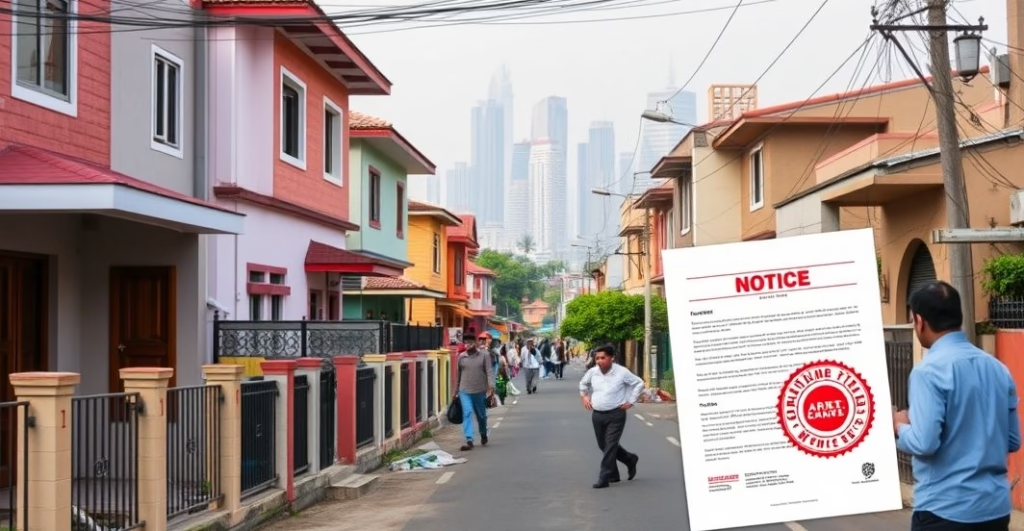
The Yamuna Expressway Industrial Development Authority (YEIDA) has revised its informal sector/lower-income group (LIG) housing policy by increasing the minimum plot size from 30 square metres to 40 square metres. The move responds to an internal viability review that found smaller plots would hinder safe vertical expansion and functional layouts under current building norms.
Why 40 sqm matters
A 40 sqm plot offers more efficient building design, improved structural comfort and better prospects for a safe, usable home. Officials say this size aligns with standards used by neighbouring development authorities and helps ensure allottees can actually build homes that meet basic living standards rather than just maximising plot counts.
Scope and numbers
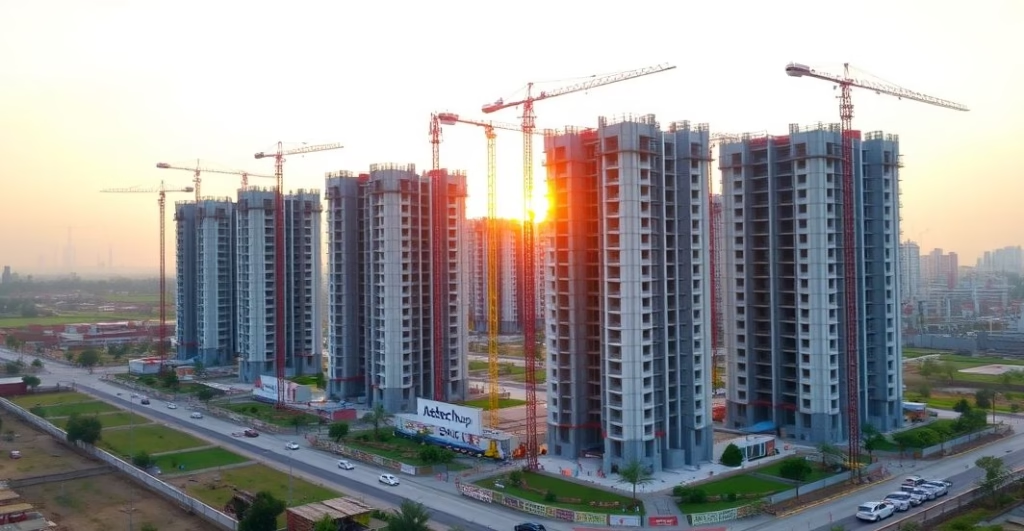
Under the revised configuration, the bulk of the inventory is planned for Sector 18 (2,880 plots), with 455 plots in Sector 17 and 463 plots in Sector 20. These parcels are part of a broader allotment strategy across the Yamuna Expressway corridor, where YEIDA previously allotted a wide range of residential plots from 60 sqm to 4,000 sqm in several sectors.
Eligibility and affordability changes
YEIDA has also proposed widening the eligibility by raising the annual income ceiling from Rs 3 lakh to Rs 8 lakh. The authority says the earlier cap excluded many eligible workers—especially those in upcoming industrial clusters, allied manufacturing and logistics operations—whose earnings fall outside formal employment thresholds but exceed Rs 3 lakh annually. The revised cap broadly mirrors benchmarks used for economically weaker sections and aims to include a larger pool of beneficiaries.
What this means for Noida buyers and investors
For prospective buyers and small investors, the policy change signals a shift to more realistic, buildable housing units that prioritize liveability. Improved plot sizes and a higher income threshold could make these LIG plots more attractive to workers relocating for jobs along the Yamuna corridor. Buyers tracking wider demand drivers should also watch transit and connectivity projects that influence property values in the region — including how planned rail and metro links are reshaping market hotspots like Noida and Greater Noida. For a deeper look at transport-led demand and property pockets, see Delhi Metro expansion and Noida real estate hotspots.
New supply vs. established projects
The LIG component was carved out separately with several thousand smaller plots planned across multiple pockets. Buyers comparing options in the area may also evaluate established and upcoming residential projects nearby. For example, developments such as Ivory County – Sector 115, Noida residential project and Max Estate 128 – Sector 128 Noida residential project offer alternatives for those seeking larger units or ready amenities close to the Noida growth corridor.
Next steps and timeline
The detailed scheme — including final eligibility norms, pricing and timelines — will be placed before the YEIDA board after the consultant submits the updated proposal. Officials emphasize that this policy shift reflects a conscious move toward realistic planning: prioritising quality, safety and functional living over purely numerical allotments.
How to evaluate this change
- Assess buildability: 40 sqm plots improve vertical expansion potential and compliance with building norms.
- Consider income eligibility: the Rs 8 lakh cap widens the beneficiary base and aligns with broader affordable housing standards.
- Compare options: weigh newly planned LIG plots against existing projects and connectivity prospects to judge long-term value.
As the proposal moves toward final approval, buyers, developers and local stakeholders should monitor board updates and consultant findings to understand pricing, allotment mechanisms and construction timelines.
This article was auto-generated as part of a smart content campaign powered by Growwh.com. Curious how we do it? Chat with us to learn more about our content automation systems.