

Auto-published by Growwh – a smarter way to scale content and marketing. Want to know more? Chat with us.
TL;DR: Noida has activated GRAP Stage-III: all non-essential construction halted, RMC plants and crushers closed, and older petrol/diesel vehicles banned. Expect project delays, stricter enforcement and short-term disruption; monitor developer updates and prioritize health precautions.
Understanding Noida’s GRAP Stage-III Construction Ban
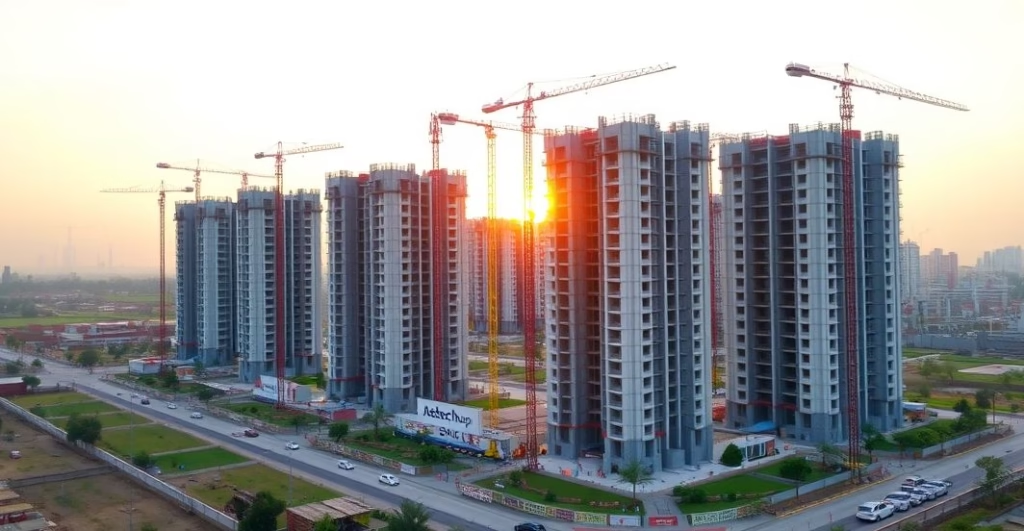
Noida has moved to Stage-III of the Graded Response Action Plan (GRAP) as air quality in the Delhi-NCR region deteriorates into the “severe” category. The Noida Authority has ordered an immediate halt to all construction activities except those deemed essential—metro projects, hospital construction and flyovers. Authorities have also ordered the shutdown of ready-mix concrete (RMC) plants, stone crushers and demolition works until further notice. Vehicle restrictions include bans on BS-III petrol and BS-IV diesel four-wheelers within city limits.
What the restrictions mean for residents and commuters
Practical implications for daily life include reduced construction noise and dust but potential delays on private and commercial building timelines. The vehicle bans aim to lower emissions from older vehicles, while the closure of RMC plants and crushers targets major local sources of particulate matter (PM2.5 and PM10). Residents are urged to limit outdoor activity, use masks when necessary, and follow advisories from health authorities.
Key measures under GRAP Stage-III
- Immediate suspension of non-essential construction activity (except metro, hospitals, flyovers).
- Ban on BS-III petrol and BS-IV diesel four-wheelers operating in Noida.
- Shutdown of ready-mix concrete plants, stone crushers and demolition works.
- Increased monitoring and potential penalties for non-compliance.
Short-term impact on real estate and projects
Construction halts will delay project timelines across the city, affecting handovers, retail rollouts and office fit-outs. Projects near major transport upgrades and resilient markets may be less affected in the long run—transit connectivity, for instance, continues to drive demand. For context on how transit expansion shifts luxury and investment hotspots, consider how planned metro reach and connectivity shape markets: Delhi Metro Expansion and luxury property hotspots in Noida.
Developers with ongoing launches in Noida Extension should monitor municipal advisories closely; mixed-use retail and studio-office schemes face pauses that can affect leasing and pre-sales. An example of projects that could be impacted by timing changes are developments similar to Nirala Gateway Noida Extension – Retail, Studio & Office Spaces, where retail fit-outs and construction timelines are critical to occupancy planning.
Large-format retail and mall projects along major corridors like the Noida Expressway are also sensitive to temporary shutdowns of construction inputs. For reference, properties and commercial zones around major expressway developments, such as Sikka Mall of Noida – Retail, Office & Food Court on Noida Expressway, typically factor in infrastructure timelines when planning openings.
Advice for homebuyers, tenants and investors
- Check project status updates directly with developers and request revised timelines in writing.
- Tenants planning fit-outs should expect delays and budget for potential rescheduling of contractors and material deliveries.
- Investors: short-term market pauses are common during GRAP activations; focus on long-term fundamentals like connectivity, developer reputation and project approvals.
- Residents: follow local advisories, minimize outdoor exposure during peak pollution hours and use indoor air purifiers if available.
Compliance and enforcement
The Noida Authority has emphasized strict compliance and warned of legal action and penalties for violations. Agencies and institutions operating within Noida must follow directives from the Commission for Air Quality Management (CAQM) and local enforcement teams. Businesses should maintain documentation showing essential-status approvals for any active works to avoid penalties.
Longer-term perspective
While the immediate focus is public health and air quality control, repeated GRAP activations underscore the importance of green building practices, cleaner fuel use, and resilient infrastructure planning in the National Capital Region. Developers and city planners may accelerate dust-control measures, low-emission construction machinery adoption, and scheduling adjustments to reduce future disruptions.
Stay informed and plan conservatively—project delays are likely in the short term, but connectivity-led demand and quality infrastructure will continue to shape Noida’s real estate landscape once air quality stabilizes.
This article was auto-generated as part of a smart content campaign powered by Growwh.com. Curious how we do it? Chat with us to learn more about our content automation systems.