

Auto-published by Growwh – a smarter way to scale content and marketing. Want to know more? Chat with us.
TL;DR: The Supreme Court ordered a new developer to finish Supertech Supernova, prioritising homebuyers over lenders and expediting completion. This sets a practical template to rescue stalled projects under the IBC.
Supreme Court order breathes life into stalled housing projects
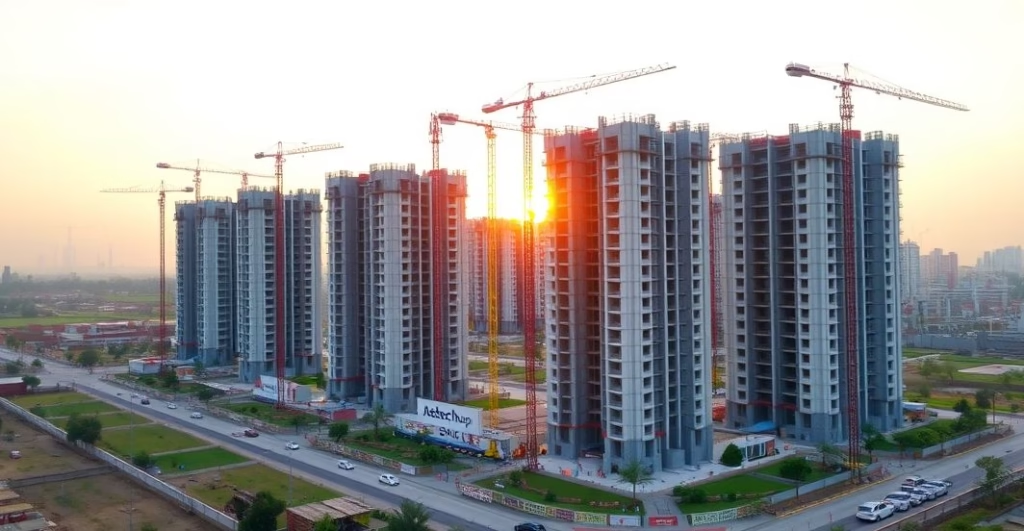
The Supreme Court’s directive to bring in a fresh developer to complete the Supertech Supernova project in Noida marks a pivotal shift in handling frozen real estate cases. By sidelining the erstwhile promoters, the insolvency resolution professional and the Committee of Creditors (CoC), the court prioritised the interests of homebuyers and created a blueprint that could be replicated for other stalled projects across India.
Key elements of the ruling and what they mean
- Appointment of an independent 3-member committee to invite and vet proposals from new developers based on time-bound execution, track record and financial viability.
- A prohibition on developers associated with the corporate debtor or erstwhile management from participating, ensuring impartial selection.
- Temporary suspension of payments to lenders and land-owning agencies until construction is complete—placing completion and delivery ahead of financial claims.
- Use of equitable powers to short-circuit protracted IBC timelines so that projects that matter to lakhs of homebuyers can be completed without being trapped in indefinite legal limbo.
Why this matters to homebuyers and buyers-in-waiting
For homebuyers stuck in incomplete projects, the ruling offers a clear message: courts can intervene to prioritise possession and completion rather than merely maximising creditor recoveries. This judicial approach acknowledges systemic failures in the insolvency framework for real estate and focuses on practical remedies that deliver homes rather than long, uncertain legal processes.
Buyers—especially NRIs and those investing from abroad—should combine legal awareness with careful transactional checks. Practical due diligence is now more important than ever; see guidance for overseas investors in Legal due diligence for NRI property buyers in India to protect your purchase and avoid stalled-project risks.
Implications for developers, lenders and regulators
The ruling signals tougher scrutiny of promoters who misuse insolvency tools to evade obligations. By empowering an independent committee to appoint replacement builders, the court discourages willful default and related-party resolutions that have long delayed completions. Lenders may face short-term recovery delays, but the approach aims to preserve the broader public interest by ensuring delivery to end-users.
Infrastructure and resale value: a bigger picture
Beyond completion, infrastructure improvements such as metro expansions and connectivity upgrades materially affect property demand and long-term value. Projects in the NCR stand to gain from improved transit links; consider how mass transit can re-rate neighbourhoods when evaluating stalled projects or new investments. For a focused view on transit-driven hotspots, read about the Delhi Metro Expansion: luxury property hotspots and its impact on local markets.
How investors can future-proof choices in a shifting market
Structural changes and judicial interventions are reshaping the real estate risk landscape. Investors should blend legal safeguards with long-term market perspective—diversifying across asset types, focusing on developers with strong execution records, and considering macro trends through 2026 and beyond. For strategic planning and scenario analysis, explore insights on how to Future-proof your wealth: Indian real estate in 2026.
Practical checklist for homebuyers in stalled projects
- Document review: title, RERA registration, pending dues and litigation timelines.
- Track record: confirm the proposed replacement developer’s completed projects and delivery history.
- Payment safeguards: negotiate escrow structures, milestone-based releases and independent monitoring of construction progress.
- Collective action: coordinate with fellow homebuyers to ensure transparency in the committee’s selection and contract terms.
Conclusion
The Supreme Court’s order in the Supernova case sets a practical precedent: where insolvency frameworks stall delivery, judicially supervised replacement of developers can restore progress and protect public interest. While the ruling does not eliminate all risks, it redirects the focus of resolutions toward completion and buyer relief—an important step in rebuilding confidence across India’s housing market.
Takeaway: Homebuyers and investors should increase due diligence, monitor judicial and regulatory developments, and prioritise execution track records when choosing projects to minimise exposure to stalled developments.
This article was auto-generated as part of a smart content campaign powered by Growwh.com. Curious how we do it? Chat with us to learn more about our content automation systems.