

Auto-published by Growwh – a smarter way to scale content and marketing. Want to know more? Chat with us.
TL;DR: Omaxe repaid ~₹80 crore to the SWAMIH fund using internal cash, covering New Chandigarh and Prayagraj projects. This boosts developer credibility and buyer confidence; investors should reassess risks and returns using an ROI tool.
Omaxe repays ₹80 crore to SWAMIH fund: quick overview
Omaxe Group has fully repaid about ₹80 crore (including interest) drawn from the government-backed SWAMIH (Special Window for Affordable and Mid-Income Housing) fund for projects in New Chandigarh and Prayagraj. The repayment was completed through the company’s internal cash generation, underscoring execution focus and improved liquidity for the developer.
Key figures at a glance
- SWAMIH sanctions: ₹168.80 crore for “The Lake” (New Chandigarh) and ₹60.40 crore for “Omaxe Shiva, Shiva 2, Shiva 3” (Prayagraj).
- Amount drawn by Omaxe: ₹70 crore.
- Amount repaid (including interest): ~₹80 crore.
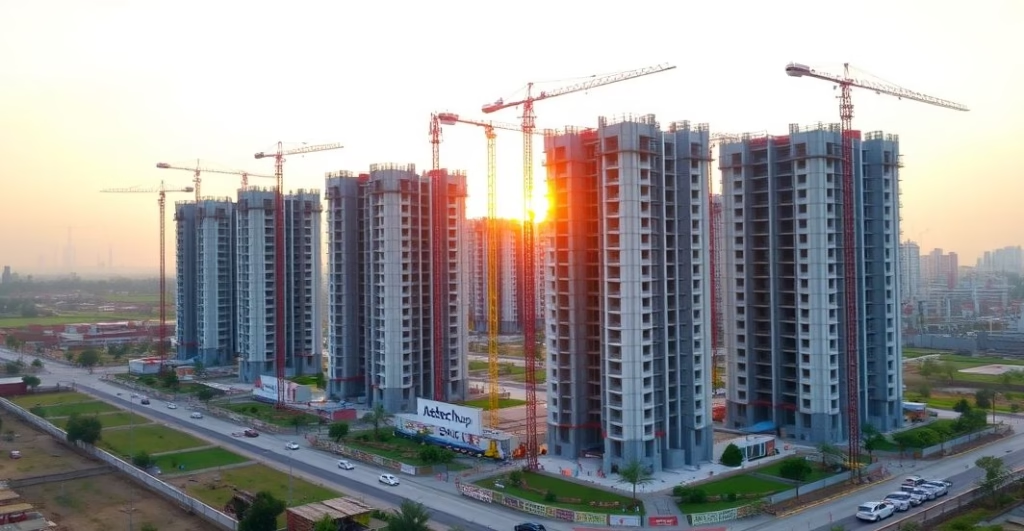
- Project scale: 1,402 units in New Chandigarh; 304 independent floors in Prayagraj.
Why this repayment matters
This action carries several implications for buyers, lenders and the wider real estate market:
- Improved developer credibility: Repayment from internal cash flows signals disciplined cash management and a commitment to completion and delivery.
- Stronger buyer confidence: Clearing a government-backed distress facility reduces execution risk for the specific projects and reassures booked buyers.
- Positive lender sentiment: Timely settlement reflects favorably on Omaxe’s balance sheet and can ease access to future financing on better terms.
- Market ripple effects: Successful exits from stress funds like SWAMIH can set a precedent for other developers and help reduce overall sectoral stress.
Context for investors and homebuyers
For prospective buyers and investors evaluating residential opportunities, consider both micro and macro drivers. Project-level execution is now bolstered by this repayment, while broader demand factors—like infrastructure and regional growth trajectories—will determine longer-term value. Tools such as the realty ROI calculator for real estate investments can help you model returns, cash flows, and payback timelines before committing capital.
Where this fits in a longer-term strategy
Developers demonstrating consistent delivery and healthy internal cash flows make a compelling case for long-term allocations to property. If you’re thinking about diversification or hedging inflation with bricks-and-mortar, consider frameworks that account for location, delivery timelines and infrastructure-led appreciation—for example, guidance on how to future-proof your wealth with Indian real estate in 2026.
Infrastructure and regional demand
Connectivity upgrades and transit projects remain key value drivers. For buyers and investors watching North India, proximity to mass transit, new roads and civic improvements can accelerate capital appreciation; research on the Delhi Metro expansion and NCR luxury property hotspots highlights how transit corridors reshape demand patterns, which is relevant for NCR-linked developments and spillover regions.
Practical takeaways
- If you’re a buyer in the repaid projects: track completion milestones and documentation; the repayment reduces one material execution risk.
- If you’re an investor: use ROI and sensitivity tools to stress-test assumptions; monitor developer EBITDA/cash flow trends.
- If you’re a lender or partner: view disciplined repayment as a positive signal but continue due diligence on future project cashflows.
Omaxe’s repayment to the SWAMIH fund is more than a headline number—it is an operational signal that execution and internal cash generation are being prioritized. For market participants, the event reinforces the importance of rigorous project appraisal, location-led demand analysis, and the use of practical tools to evaluate investment returns.
Note: Keep monitoring project updates, completion certificates, and possession timelines for the most accurate assessment of delivery and valuation milestones.
This article was auto-generated as part of a smart content campaign powered by Growwh.com. Curious how we do it? Chat with us to learn more about our content automation systems.