

Auto-published by Growwh – a smarter way to scale content and marketing. Want to know more? Chat with us.
TL;DR: Unsecured, waterlogged excavations across Noida are causing fatal accidents. Immediate barricades, drainage, and strict enforcement by developers and authorities can prevent more tragedies.
Report dangerous pits with photos and exact locations to expedite remediation.
Overview
Unsecured, deep excavations and waterlogged trenches across Noida have become recurring public-safety hazards. From overgrown gorges on busy roads to partially constructed basements that fill with sewage and rainwater, these pits endanger commuters and residents—especially during foggy, low-visibility conditions. This post explains the problem, who is accountable, immediate safety measures, and long-term solutions for developers, authorities and communities.
Why these pits are so dangerous
Several factors make construction-site pits deadly:
- Waterlogging: Rain and runoff can quickly fill excavations, hiding depth and hazards beneath the surface.
- Poor barricades: Temporary metal sheets and collapsed barriers leave gaps that allow vehicles and pedestrians to fall in.
- Exposed reinforcements: Partially built columns and protruding iron rods increase injury risk.
- Low visibility: Night-time fog, rain, or lack of reflective markers turn even roadside pits into death traps.
Where the problem appears most often
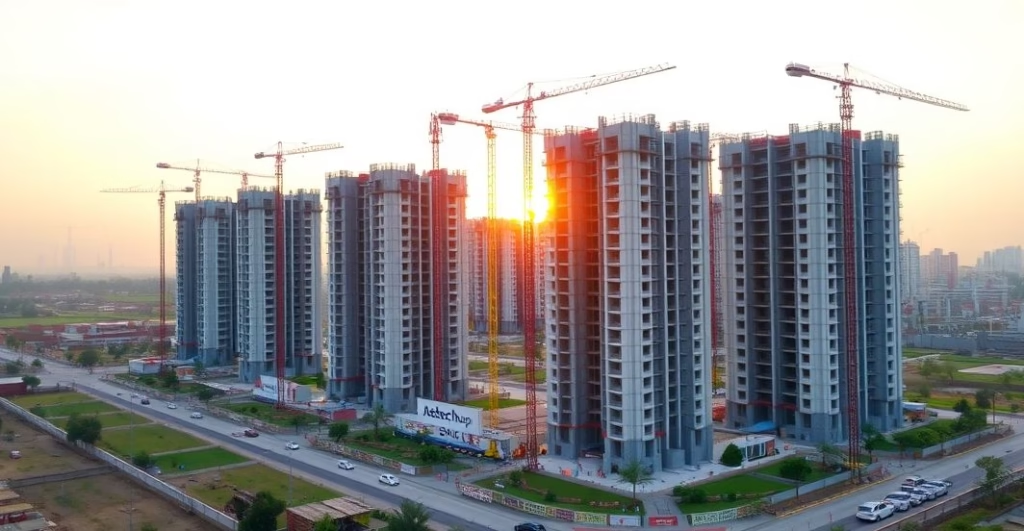
Hazardous excavations are commonly found near busy arteries, stalled projects and vacant plots in developing precincts. These are often adjacent to residential clusters and commercial corridors. In the context of Noida’s growth, proximity to major infrastructure or mixed-use schemes can make such sites especially consequential: they reduce walking safety, disrupt traffic flow, and undermine investor confidence in nearby developments like Delhi Metro Expansion: Luxury Property Hotspots?. Stalled or partially completed commercial plots — similar to projects such as Nirala Gateway in Noida Extension and retail hubs like Sikka Mall of Noida — underscore how construction pauses can leave dangerous scars on the urban fabric when sites are not secured.
Who is accountable?
Accountability rests with multiple stakeholders:
- Developers/Builders: Primary responsibility to fence, drain, and mark excavations. Proper site management prevents trespassing and accidental falls.
- Local Authorities: Municipal and planning bodies must enforce safety conditions, audit stalled projects, and ensure corrective action when designs are not adhered to.
- Contractors: Responsible for on-the-ground safety implementation—temporary retaining walls, night-time lighting, and signage.
- Residents and Road Users: Vigilance and timely reporting accelerate remediation.
Immediate safety measures (what needs to be done now)
For sites that are already open or waterlogged, the following are critical:
- Install robust, continuous barricades with no gaps within 24–48 hours.
- Deploy reflective tape, hazard lighting and signage for night-time visibility.
- Drain standing water, remove floating vegetation and block sewage inflow to prevent hidden-depth risks.
- Cover pits with temporary load-bearing plates or secure netting where feasible.
- Lock and maintain boundary walls to prevent accidental vehicle or pedestrian access.
Checklist for developers and contractors
- Create and publish a site safety plan showing fencing, drainage, and emergency-response steps.
- Schedule daily inspections and maintain a log accessible to local authorities.
- Provide trained night-shift staff or security to manage fog- or monsoon-related risks.
- Install permanent markers or bollards along road edges where excavations are adjacent to carriageways.
What authorities should enforce
Local bodies must shift from episodic drives to institutionalized oversight:
- Mandate safety deposits or progressive guarantees that can be encashed if builders fail to secure dormant sites.
- Carry out circle-wise audits to map and prioritize hazardous locations for remediation.
- Implement faster penalties and remediation orders, coupled with publicly available compliance trackers so residents can see progress.
- Work with traffic police to erect temporary diversions and signage during high-risk months (monsoon and winter fog).
How residents and commuters can reduce risk
Residents are the first line of defense when authorities and builders lag:
- Report unsecured excavations to municipal hotlines and document locations with photos and GPS coordinates.
- Use community WhatsApp groups or resident welfare associations to spread alerts about dangerous stretches during fog or rain.
- Avoid driving near stalled sites at night; if unavoidable, slow down and use headlights on low-beam to better judge roadside edges.
Long-term strategies for a safer urban expansion
As Noida grows, integrating site-safety norms into urban planning will reduce future tragedies. This includes tying approvals and land-use clearances to demonstrated site safety management, insisting on proper drainage design to prevent long-term waterlogging, and creating a digital map of excavations that is updated daily by enforcement teams. Protecting public spaces during development makes investments in nearby properties—residential, retail or mixed-use—more secure and attractive.
Quick action steps if you spot a hazardous pit
- Note the exact location and nearest landmark.
- Take timestamped photos from a safe distance.
- Report to the local municipal cell and the site developer/contractor if identifiable.
- Alert neighbors and social groups; post a location-based warning to deter unsuspecting drivers.
Conclusion
Unsecured construction pits and waterlogged trenches are preventable hazards. Coordinated action by developers, contractors and local authorities—backed by community vigilance—can eliminate most risks quickly. Stronger enforcement, transparent site management and practical safety interventions will protect lives and restore public confidence in ongoing and future developments across Noida.
Takeaway: If you encounter an exposed excavation, document it, report it, and keep a safe distance until the site is secured.
This article was auto-generated as part of a smart content campaign powered by Growwh.com. Curious how we do it? Chat with us to learn more about our content automation systems.