
Auto-published by Growwh – a smarter way to scale content and marketing. Want to know more? Chat with us.
TL;DR: Centre approves 11.56 km Aqua Line extension adding 8 stations from Botanical Garden to Noida Sector 142, costing Rs 2,254.35 crore.
Targeted for completion in 4 years, the stretch will boost Noida–Greater Noida–Delhi connectivity and spur real estate and commercial demand.
Overview
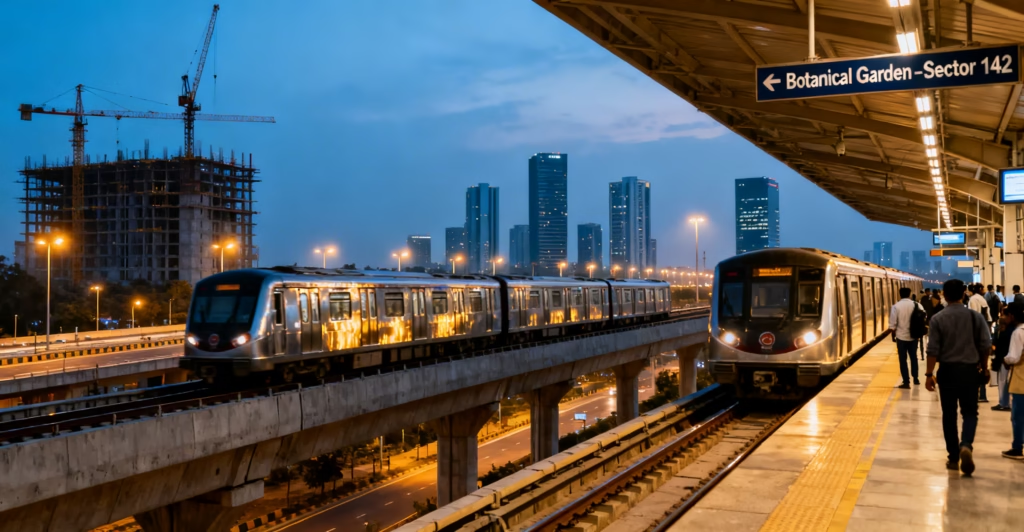
The Centre has approved an 11.56 km elevated extension of the Noida Aqua Line from Botanical Garden to Noida Sector 142. Sanctioned at Rs 2,254.35 crore, the project will add eight new stations and is targeted for completion within four years. This extension strengthens seamless connectivity across Noida, Greater Noida and Delhi and enhances access to IGI Airport and major railway hubs.
Route, Stations & Integration
The new corridor will include the following stations: Botanical Garden, Noida Sector 44, Noida Office, Noida Sector 97, Noida Sector 105, Noida Sector 108, Noida Sector 93 and Panchsheel Balak Inter College. At Botanical Garden, passengers will get a direct interchange with the Delhi Metro network, connecting to both the Blue Line and Magenta Line.
- Length: 11.56 km (elevated)
- Stations: 8 new stops
- Cost: Rs 2,254.35 crore
- Target completion: 4 years from sanction
The extension will integrate with the existing 29.707 km Aqua Line corridor (Noida Sector 51 to Depot Station), the recently sanctioned 2.60 km Depot-to-Boraki MMTH spur, as well as the 17.76 km DMRC-operated metro network in Noida, enabling efficient interchanges and longer direct journeys.
Connectivity Benefits
This corridor is expected to significantly reduce travel times for daily commuters between Noida, Greater Noida and Delhi. Improved interchange options at Botanical Garden and better linkage to the Boraki Multi-Modal Transport Hub (MMTH) will enhance first- and last-mile connectivity, while making IGI Airport and major railway stations easier to access for residents and businesses alike.
Economic & Urban Impact
The elevated stretch cuts across a well-developed catchment featuring IT/ITES hubs, institutional campuses and dense residential sectors along the Noida–Greater Noida Expressway. Anticipated outcomes include increased public transport adoption, eased road congestion and stronger sustainable urban growth.
What This Means for Real Estate and Commercial Development
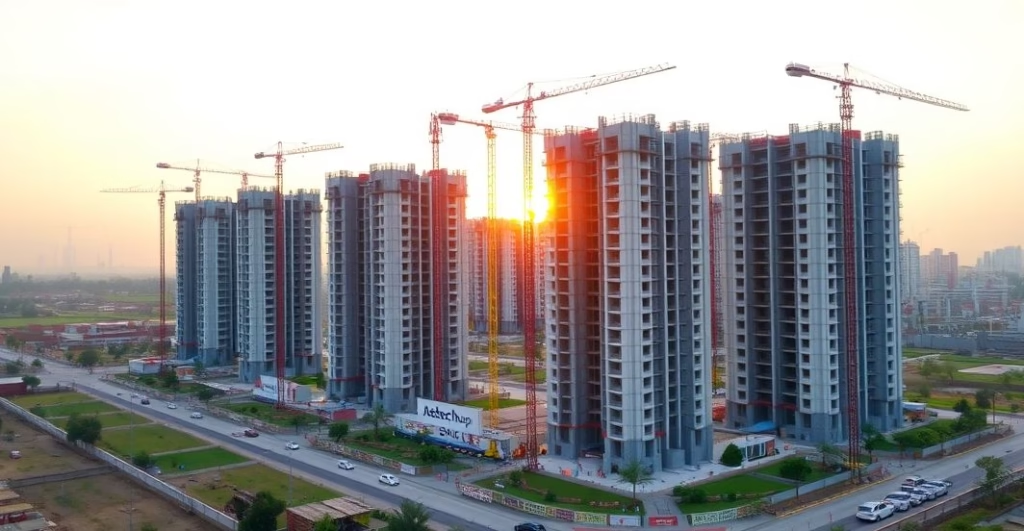
Metro extensions historically drive demand for residential and commercial properties around stations. Expect heightened interest from investors and developers in nearby sectors, with potential appreciation in residential values and leasing yields for office and retail assets. For context on metro-led property trends and hotspots, read Delhi Metro Expansion: Luxury Property Hotspots.
Sector 142 and adjacent corridors are also primed for premium office and retail developments, aligning with upcoming metro access and the broader Noida growth story. Projects focused on high-quality workspace and retail placements—like One FNG by Group 108: Premium Office and Retail Spaces in Sector 142, Noida—stand to gain from improved commuter flows and corporate relocations.
Retail and leisure nodes along the expressway will benefit too: integrated malls, food courts and mixed-use properties can capture increased footfall generated by metro ridership. Consider opportunities in developments such as Sikka Mall of Noida on Noida Expressway: Retail, Office & Food Court Spaces where enhanced transit access elevates commercial prospects.
Commuter Experience & Timeline
Passengers can expect improved reliability, reduced dependence on cars for inter-city commutes and more direct routes to employment nodes. With an estimated four-year construction window, phased milestones (design finalization, foundation and pier works, track laying and station fit-outs) will be rolled out to minimize disruption and keep the project on schedule.
Planning Considerations & Sustainability
The extension aligns with broader urban mobility goals—promoting public transport, reducing vehicular emissions and enabling transit-oriented development. As the corridor develops, planners and developers should coordinate on last-mile connectivity, pedestrian access, feeder bus services and multi-modal integration at key interchange points.
Final Takeaway
The approved Aqua Line extension from Botanical Garden to Noida Sector 142 is a transformative infrastructure move for the Noida–Greater Noida region. It will improve regional connectivity, support commercial and residential growth, and catalyze transit-oriented investment across multiple sectors. For homeowners, businesses and investors, the extension represents a clear signal to evaluate opportunities in station-adjacent areas and emerging urban nodes.
This article was auto-generated as part of a smart content campaign powered by Growwh.com. Curious how we do it? Chat with us to learn more about our content automation systems.