
Auto-published by Growwh – a smarter way to scale content and marketing. Want to know more? Chat with us.
TL;DR: GNIDA fined Ajnara Homes Rs 50 lakh after its STP remained shut for two years, causing sewage discharge and basement flooding.
The society (≈2,300 flats, ~1.15 MLD sewage) also faced Rs 4.32 lakh for poor solid waste management; builders must restore STP, reuse treated water and comply with NGT/CPCB/UPPCB norms.
Greater Noida authority fines Ajnara Homes over non-functional STP
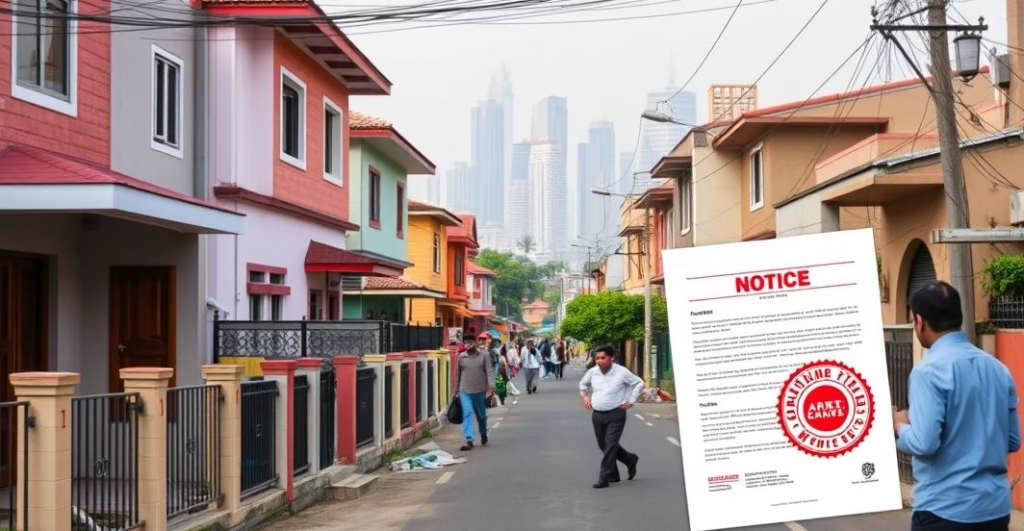
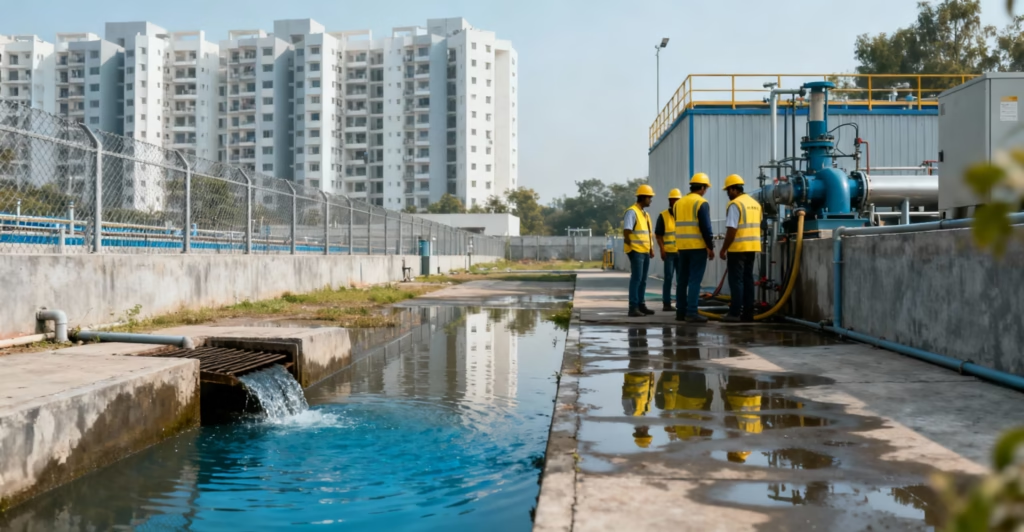
Greater Noida Industrial Development Authority (GNIDA) has imposed a penalty of Rs 50 lakh on Ajnara Homes (Sector 16B) after a sewage treatment plant (STP) at the society was found completely non-functional. Inspectors discovered untreated sewage being discharged into a drain, choking and eventually causing sewage to enter basements of nearby homes. GNIDA additionally levied a Rs 4.32 lakh penalty for poor solid waste management.
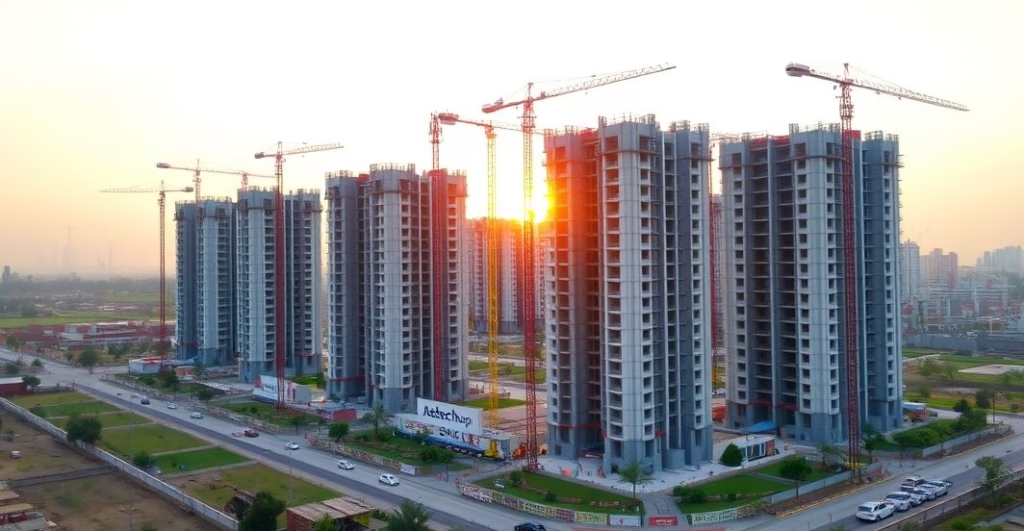
The affected society houses around 2,300 flats and generates an estimated 1.15 million litres per day (MLD) of sewage. Officials say the STP had reportedly been shut for two years. GNIDA directed the builder to deposit the penalty within seven working days, make the STP operational immediately, and ensure treated sewage is reused for irrigation and other non-potable purposes.
Checks found violations of National Green Tribunal (NGT), Central Pollution Control Board (CPCB) and Uttar Pradesh Pollution Control Board (UPPCB) norms, including unauthorized groundwater extraction for irrigation. GNIDA’s enforcement drive includes issuing notices to societies to provide details on installed STP capacity, operational status and reuse practices. In cases of non-compliance, on-site inspections and penal action will follow.
Impact on residents and immediate steps
Residents affected by sewage overflow should document damage with photos, record dates and times of incidents, and register formal complaints with GNIDA and local civic bodies. Where basements or utilities are impacted, seek urgent remediation and request written confirmation from the builder that the STP will be restored and treated water reused as mandated. Collective resident action and timely escalation can speed inspections and remediation.
What this means for buyers and investors
Infrastructure compliance is now a critical due-diligence checkpoint for homebuyers and investors. Before moving ahead on any purchase or resale, review builder compliance certificates, STP operation records and reuse protocols; for overseas investors this is especially important — consider reading Legal due diligence for NRI property buyers in India to understand required documentation and protections.
Connectivity and long-term value are linked to infrastructure performance. Planned transport upgrades can raise demand, but only when basic services are reliable — factor in projects such as the Delhi Metro expansion and luxury property hotspots when assessing neighbourhood prospects, while also verifying onsite utilities like STPs and waste management systems.
For detailed market context and practical guidance on property issues, maintenance and local regulations, visit PropTrust property blogs and insights for a wider set of resources and analysis that can help residents and buyers navigate compliance risks.
Compliance takeaway
- Builders and societies must keep STPs operational and document treated water reuse to meet NGT/CPCB/UPPCB requirements.
- Authorities are enforcing fines and requiring rapid remediation — expect stricter inspections and steeper penalties for continued non-compliance.
- Residents should keep records, coordinate with elected society office-bearers and escalate to GNIDA if remediation is delayed.
GNIDA’s action against Ajnara Homes underlines a broader enforcement trend: reliable STP operation and solid waste management are now central to neighbourhood liveability and long-term property value. Prompt remediation, transparent reporting, and consistent reuse of treated water are essential steps to prevent environmental harm and legal penalties.
This article was auto-generated as part of a smart content campaign powered by Growwh.com. Curious how we do it? Chat with us to learn more about our content automation systems.