
Auto-published by Growwh – a smarter way to scale content and marketing. Want to know more? Chat with us.
TL;DR: Residents of La Residentia, Greater Noida West, are protesting irregular water, faulty lifts and poor maintenance, and have planned a 10-day sit-in. Document issues, form a resident committee, issue formal notices, and escalate to regulatory bodies if needed.
Overview: Why La Residentia residents are back on the streets
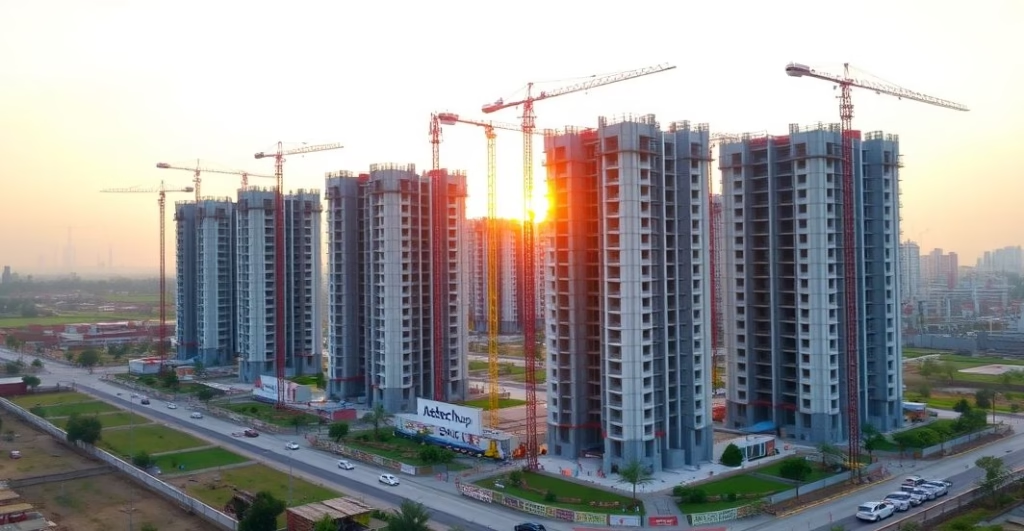
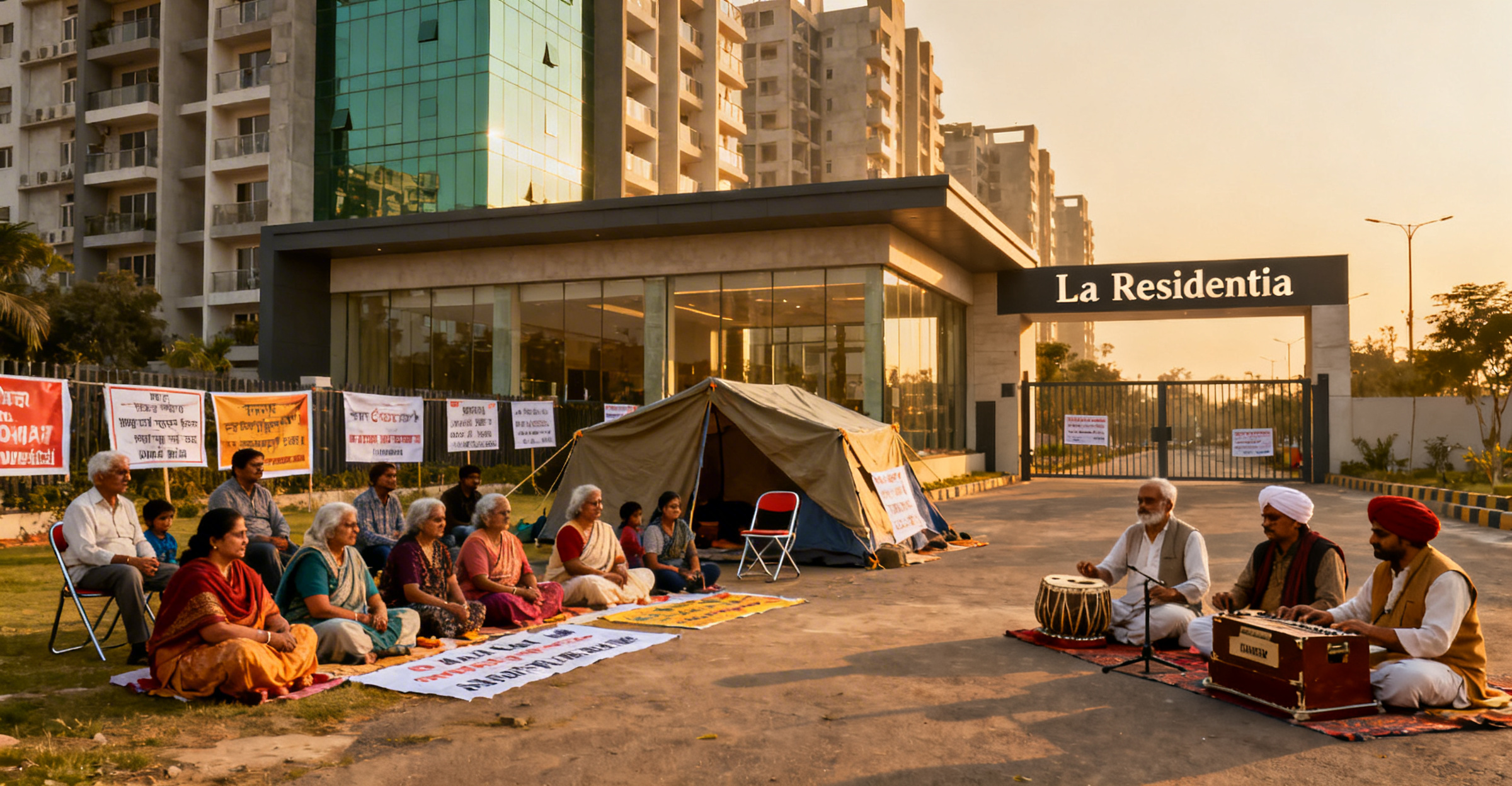
Residents of La Residentia in Greater Noida West renewed protests after months of unresolved maintenance complaints. With about 2,200 of the society’s 3,256 flats occupied, families reported irregular water supply, frequent electricity outages, malfunctioning lifts, security lapses and poor upkeep of common areas. After repeated weekend demonstrations, residents announced a peaceful sit-in and a 10-day camp outside the builder’s sales office during Navratras to press for urgent redressal.
Key issues fueling the protest
- Irregular water supply and complaints about water quality, affecting daily life for families and elderly residents.
- Frequent power cuts and lift malfunctions that create safety risks, especially for senior citizens and children.
- Perceived builder apathy and slow handover of maintenance responsibilities despite a new private agency taking charge in February.
- Shortage of manpower for upkeep, security and timely response to resident grievances.
Practical steps residents can take now
Protests are an important way to draw attention, but organized, documented and legal steps will help convert agitation into results. Recommended immediate actions:
- Document every issue: Maintain a register of complaints with dates, photos/videos of faults, logs of power/water outages, and copies of previous communications to the builder or maintenance agency.
- Form a temporary action committee: Elect a small, representative team (including elders, women and youth) to communicate with the builder, log grievances and coordinate the sit-in peacefully.
- Issue a formal notice: Send a written notice to the builder and the appointed maintenance agency recording unresolved issues and requesting an urgent timeline for remediation. Keep proof of delivery.
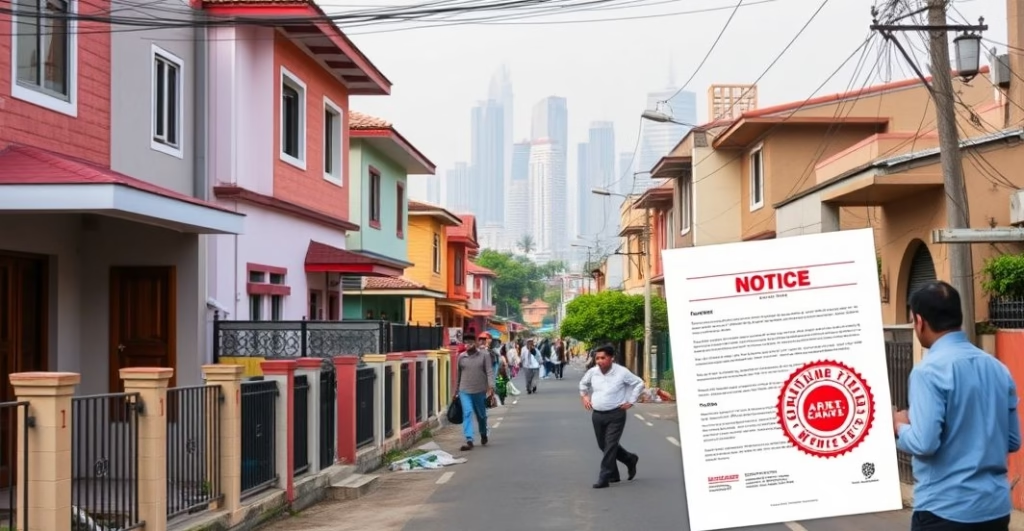
- Escalate through formal channels: If responses remain inadequate, residents can file complaints with RERA or district consumer forums, and notify local municipal authorities about safety and sanitation lapses.
- Leverage collective bargaining: Use resident strength when negotiating staffing, SLA (service level agreements) for lifts and water systems, and transparent accounting of maintenance funds.
Best practices for societies and builders to resolve disputes
Builders and maintenance agencies should prioritize a transparent handover, quick fixes for safety-critical systems, and regular communication. Recommended measures include:
- Immediate audit of lift safety and electrical systems with third-party certification where necessary.
- Clear staffing rosters and escalation matrices so residents know whom to contact for emergencies.
- Monthly status reports and town-hall meetings so residents can track progress and finances.
- Signed service level agreements with the maintenance agency covering response times, preventive maintenance schedules and penalties for non-compliance.
Data and market intelligence can guide better maintenance and investment choices. For example, homeowners and trustees can use curated analytics like PropTrust Realty IQ insights to benchmark local service standards and maintenance benchmarks against similar developments.
Why this matters beyond La Residentia
Resident expectations around safety, utilities and upkeep are rising across the Delhi–NCR. Infrastructure improvements and market trends shape both demand and accountability. For long-term owners, aligning maintenance standards with broader market forces is vital—see how broader patterns affect planning in 2026 Indian real estate trends and wealth planning. At the same time, better connectivity and new transit corridors influence value and resident expectations; the role of networks like the Delhi Metro can create luxury and maintenance hotspots, which is discussed in Delhi Metro expansion and luxury property hotspots.
Communication tips for a constructive dialogue
- Keep communications factual and time-stamped. Emotional appeals are powerful in public demonstrations, but resolution requires documented claims.
- Invite neutral mediators—senior community members, local elected representatives or an independent ombudsman—to observe meetings with the builder.
- Use short, publicised agendas for meetings and publish minutes so residents who cannot attend remain informed.
From protest to permanent improvement
A peaceful sit-in, community solidarity (including cultural activities such as bhajan-kirtans seen at recent gatherings) and sustained documentation increase the likelihood of meaningful responses from builders and agencies. Residents should combine peaceful agitation with clear legal notices, systematic documentation, and engagement with municipal or regulatory bodies when needed.
La Residentia’s situation highlights a recurring challenge for many rapidly occupied complexes: the transition from builder-led delivery to resident-run or agency-run maintenance. Timely handovers, transparent accounting and professional maintenance contracts paired with active resident oversight will be essential to restore trust and everyday livability.
Next steps for residents: consolidate documented complaints, set precise remedial timelines in a written agreement with the builder or agency, involve local regulators if deadlines aren’t met, and consider professional audits for technical systems that affect safety.
Final thoughts
Well-managed societies protect both quality of life and property values. Combining collective action with structured engagement, legal recourse and data-driven benchmarking (such as the insights available in PropTrust Realty IQ insights) will help residents turn protest into durable solutions while aligning community standards with evolving market expectations and infrastructure shifts.
This article was auto-generated as part of a smart content campaign powered by Growwh.com. Curious how we do it? Chat with us to learn more about our content automation systems.