
Auto-published by Growwh – a smarter way to scale content and marketing. Want to know more? Chat with us.
TL;DR: NPCL has stepped up power disconnections in Noida and Greater Noida to recover long-pending dues, impacting several societies and disrupting residents. Societies, developers and buyers should prioritise transparent accounts and contingency funds to avoid outages.
Noida power cut crackdown: what happened and why it matters
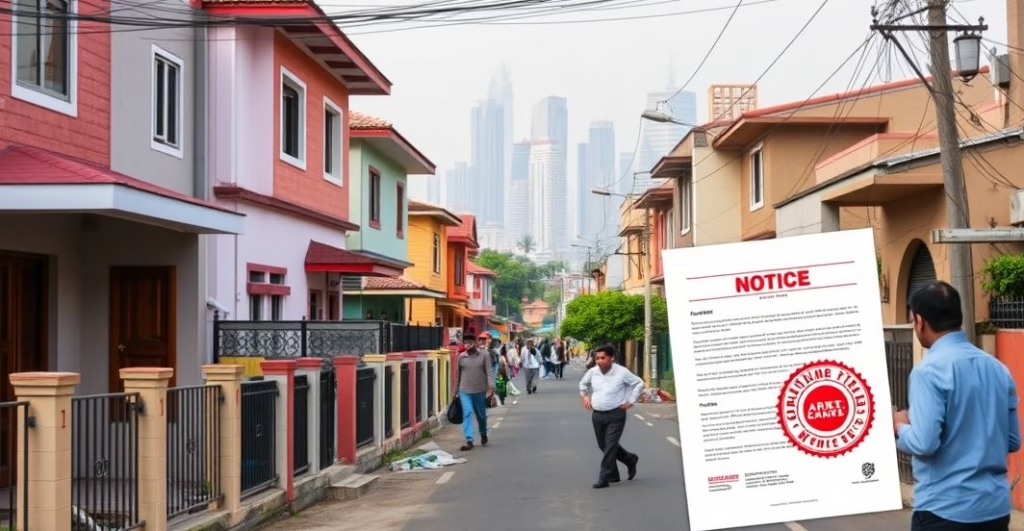
Noida Power Company Limited (NPCL) has intensified a recovery drive, disconnecting electricity to several residential and commercial complexes in Noida and Greater Noida to recover long-pending dues. Recent high-profile cuts affected Himalaya Pride (an 8-hour outage for Rs 37.3 lakh), Mahagun Mywoods (6.5 hours for Rs 1.6 crore), and Newtech La Galaxia (48 hours for Rs 7.9 lakh). NPCL officials say repeated notices and written assurances failed to produce timely payments, forcing supply suspension until dues were cleared or partially settled.
Immediate impact on residents and societies
Power disconnections have a direct impact on daily life: elevators, water pumps, lifts, lighting and household appliances are disrupted and societies often resort to costly generator use. Residents reported frustration, complaints to management, and concerns about potential financial mismanagement within some resident welfare associations (RWAs). NPCL representatives reiterated that responsibility for payment lies with builders and management bodies, not the distribution company.
Why this recovery drive matters for the local real estate market
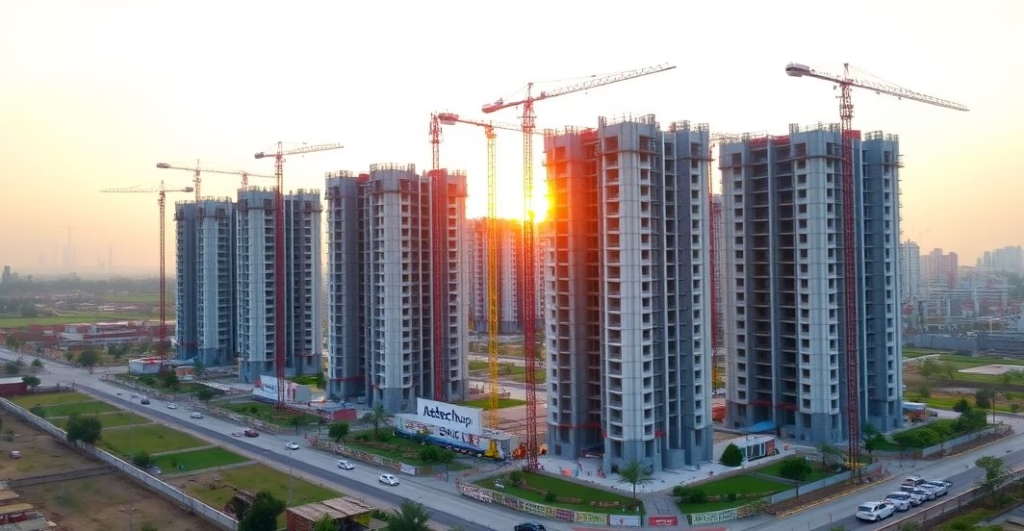
Enforcement of payments affects investor confidence, maintenance standards and the resale value of apartments. Areas with strong infrastructure growth—such as sectors impacted by transit improvements—tend to attract buyers who expect reliable utilities. For investors and buyers tracking these shifts, it helps to review analyses of emerging micro-markets, for example Noida property hotspots with Delhi Metro expansion, which highlights how transport improvements and enforcement of civic services influence demand and pricing.
Practical steps for residents, RWAs and developers
- Residents: Keep records of payment receipts and society notices. If a disconnection occurs, contact the RWA immediately to ask for a clear statement of dues and the recovery timeline.
- RWAs and management: Maintain transparent financial statements, provide regular audit reports to residents, and set up escrow or designated utility funds to avoid service interruptions.
- Developers: Coordinate with RWAs to ensure legacy dues are reconciled at handover and create clear handover documentation to prevent disputes over outstanding bills.
How to reduce the risk of future outages
Prevention hinges on timely billing, proactive follow-up with defaulters and transparent governance. Societies can set up automated reminders, regular account reconciliations and contingency reserves. For those considering property moves within Noida, consult Noida real estate location insights to evaluate neighbourhood-specific risks and utility reliability as part of the buying decision.
Regulatory and operational context
Distribution companies like NPCL must balance consumer welfare with financial sustainability. Chronic delays in collections lead to revenue shortfalls and operational strain. While NPCL has said it sympathises with affected residents, the firm maintains that enforcing payments is essential to maintain service quality across the network.
What buyers and investors should watch
Monitor a few indicators: transparency of society accounts, frequency of utility disputes, and the track record of developers on handover obligations. Also track broader market signals and local policy changes via industry updates and commentary. For continuing coverage and analysis, see Latest property news and insights from PropTrust.
Key takeaways
Power cuts enforced by NPCL are a reminder that utility dues and governance matter as much as location and amenities. Prompt payment, transparent RWA practices and developer cooperation are the fastest routes to preventing disruptive outages. Residents, buyers and investors should factor utility compliance and governance into their due diligence to protect daily living standards and long-term asset value.
This article was auto-generated as part of a smart content campaign powered by Growwh.com. Curious how we do it? Chat with us to learn more about our content automation systems.