
Auto-published by Growwh – a smarter way to scale content and marketing. Want to know more? Chat with us.
TL;DR: NMRC trims Greater Noida West phase 1 to four stations (Sector 61, 70, 123, Gaur Chowk) to avoid duplication with the Ghaziabad–Jewar RRTS and speed delivery.
Key interchanges at Sector 61 (Blue Line) and Gaur Chowk aim to ease commuting and spur real estate and retail activity while agencies decide who will complete the rest of the corridor.
NMRC redraws Greater Noida West metro route: Phase 1 explained
The Noida Metro Rail Corporation (NMRC) has revised the detailed project report (DPR) for the Greater Noida West corridor, narrowing phase 1 to four strategic stations: Sector 61, Sector 70, Sector 123 and Greater Noida Sector 4 (Gaur Chowk). The move aims to avoid duplication with a proposed rapid rail (RRTS) corridor to Jewar and to fast-track connectivity for densely populated areas while authorities decide which agency will complete the remaining stretch.
What changed and why it matters
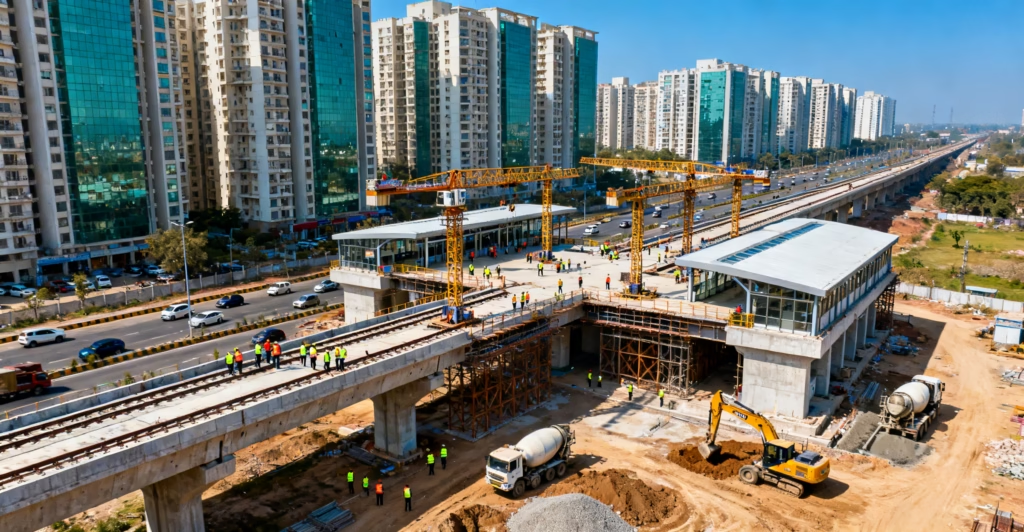
Earlier plans proposed 11 stations along an 18 km alignment linking Sector 61 on the Delhi Metro Blue Line to Knowledge Park V. The revision reduces the number of initial stations to speed delivery of key interchange points—most notably Sector 61 (Blue Line interchange) and Gaur Chowk (an interchange hub for the rapid rail corridor to the Noida International Airport). This approach is intended to provide immediate relief to commuters while inter-agency planning continues for the full corridor.
RRTS overlap: the planning challenge
The 72 km Ghaziabad-Jewar RRTS proposal runs via Greater Noida West with 22 stations and would provide high-speed connectivity to Noida International Airport. During review, central authorities flagged potential station duplication between the RRTS and the Aqua Line extension. That prompted NMRC and regional planning bodies to reassess alignments so the two systems complement rather than replicate services.
Impact on commuters and local residents
Greater Noida West houses a rapidly growing residential population with limited mass public transport, leading many commuters to rely on private vehicles and paratransit. Prioritising four stations in phase 1 means core interchange points will come online sooner, reducing travel times for commuters heading to Noida and Delhi. Still, residents want clarity on timelines and which agency will fund and build the remaining sections to Knowledge Park V and beyond.
Real estate and commercial implications
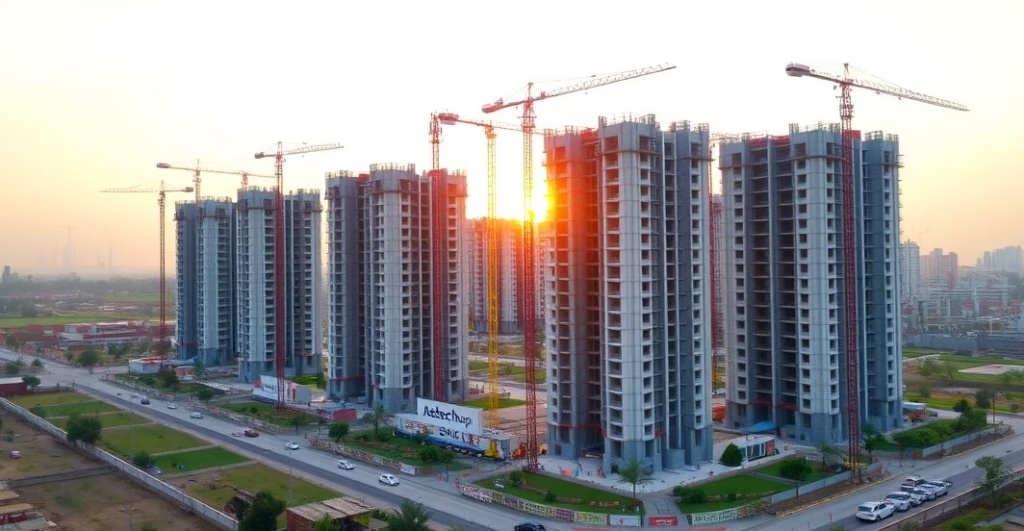
Accelerated station delivery in phase 1 will change demand dynamics across Greater Noida West and adjacent sectors. Improved connectivity around interchanges tends to boost property values and spur retail growth—an effect seen with other mass-transit-led expansions. For context on how transit extensions can create premium pockets and drive luxury demand, see Delhi Metro expansion and luxury property hotspots.
In addition to residential gains, new stations will attract commercial and retail interest along feeder corridors and expressway nodes. Projects offering retail, office and food-court spaces near major roads may see increased traction as footfall rises—developers and investors eye opportunities similar to those around the Noida Expressway, including projects like Sikka Mall of Noida: Retail, Office & Food Court spaces on Noida Expressway.
Where exactly the corridor connects
The revised phase 1 alignment will connect key sectors and hubs in Greater Noida West and nearby localities. For a sense of the neighbourhoods affected and local land-use patterns, review the detailed listing of Locations in Noida and Greater Noida West, which outlines residential clusters, commercial pockets and upcoming infrastructure nodes.
Resident response and civic action
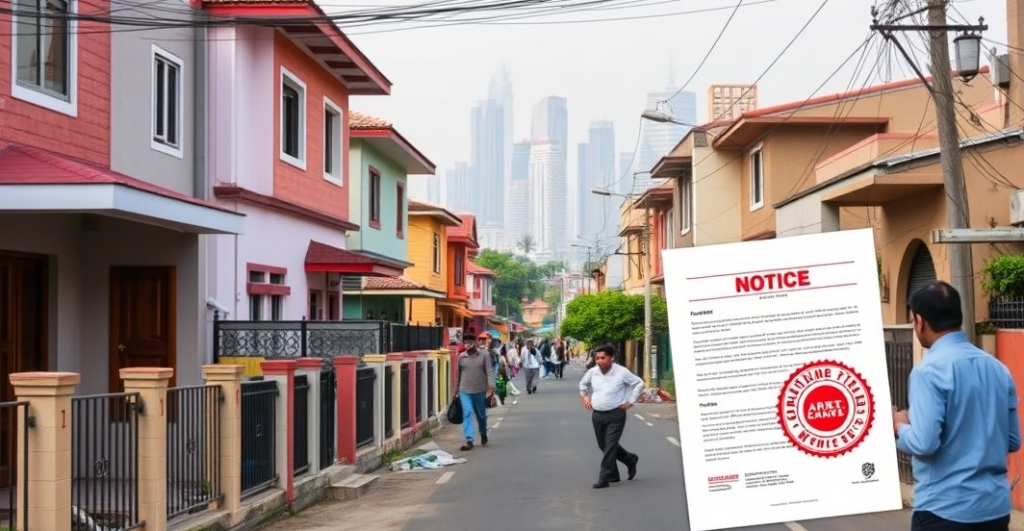
Residents and welfare associations have voiced impatience over repeated plan revisions and perceived delays. Local groups stress the urgent need for mass transit in an area with high-density high-rise developments and limited current public transport. Civic protests and memoranda to authorities underscore the expectation that the revised DPR should translate into rapid execution and transparent timelines.
Next steps and timeline
- NMRC will finalize the revised DPR for the four-station phase 1 alignment and seek sanction for construction.
- Coordination between NMRC, RRTS planners and regional authorities will determine which agency completes the remaining sections toward Knowledge Park V and the airport corridor.
- Construction start dates depend on clearances, funding approvals and inter-agency agreements; once sanctioned, targeted delivery of phase 1 stations is expected faster than the original multi-station rollout.
What residents and buyers should watch
Homebuyers, investors and commuters should monitor official DPR filings, sanction orders and tender notices to gauge project momentum. Pay attention to the confirmed station list, interchange designs (especially at Sector 61 and Gaur Chowk) and any alignment updates that affect travel-time projections and last-mile connectivity. The prioritised four-station phase 1 aims to deliver immediate network benefits while preserving options for future RRTS and metro integration.
In the coming months, clearer agency responsibilities and sanctioned construction timetables will be the decisive signals that the project is moving from planning to delivery. Until then, residents and stakeholders can prepare for staged improvements and evaluate investment decisions based on the confirmed phase 1 alignment and emerging connectivity plans.
Stay informed about station rollouts, interchange planning and commercial opportunities as the revised DPR progresses—early clarity will shape commuting patterns and property values across Greater Noida West.
This article was auto-generated as part of a smart content campaign powered by Growwh.com. Curious how we do it? Chat with us to learn more about our content automation systems.