
Auto-published by Growwh – a smarter way to scale content and marketing. Want to know more? Chat with us.
TL;DR: Allahabad High Court restored a Rs 100Cr Greater Noida farmhouse allotment to SDS Infratech and quashed the 2017 cancellation.
GNIDA must decide the developer’s zero-period relief claim within four months; implications affect titles, instalment liabilities and investor due diligence.
HC restores high-value Greater Noida farmhouse plot — what it means
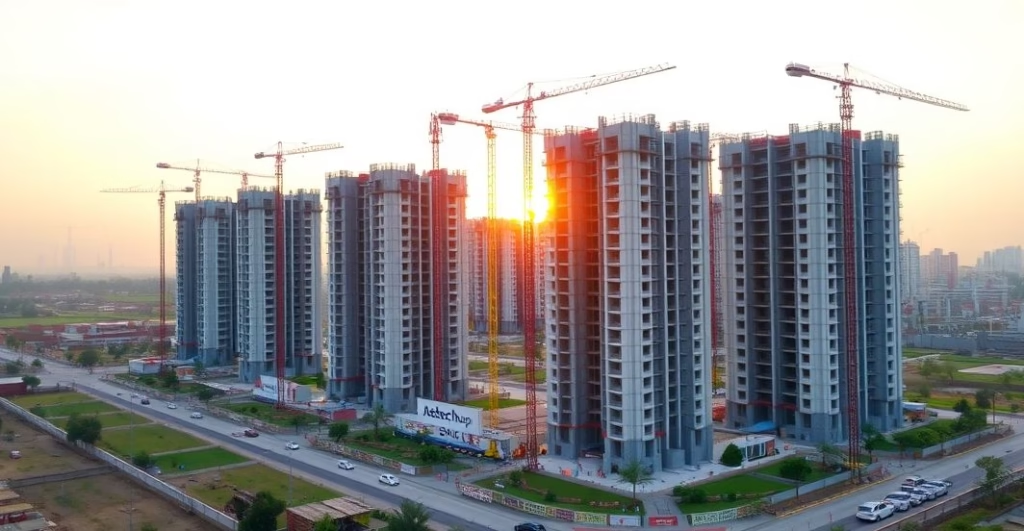
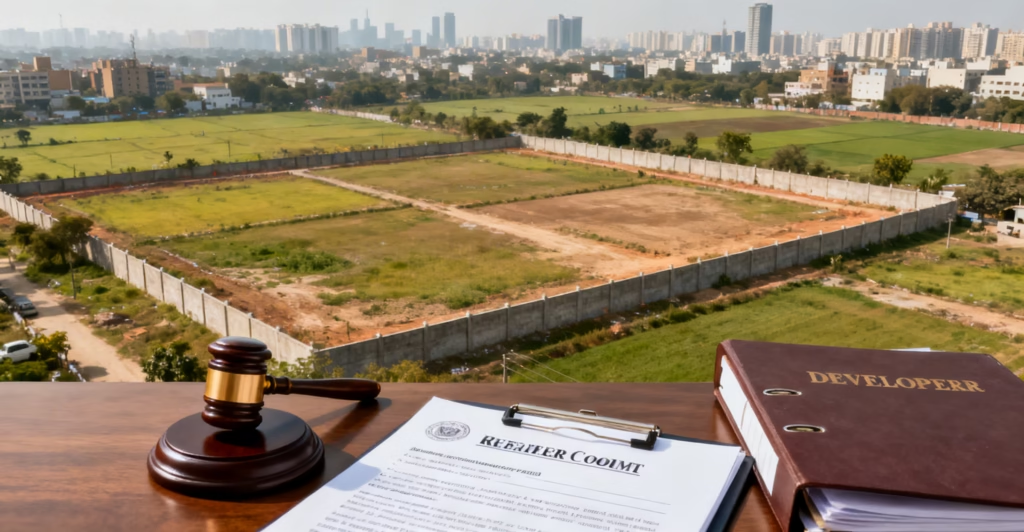
The Allahabad High Court has set aside a 2017 cancellation and restored a 3.8 lakh sqm farmhouse plot in Greater Noida allotted to SDS Infratech, reversing nearly a decade of uncertainty. The bench directed the Greater Noida Authority (GNIDA) to decide the developer’s claim for a zero-period relief within four months. This ruling has immediate legal and market implications for developers, investors and buyers tracking large land allotments in the National Capital Region.
Case background and court directions
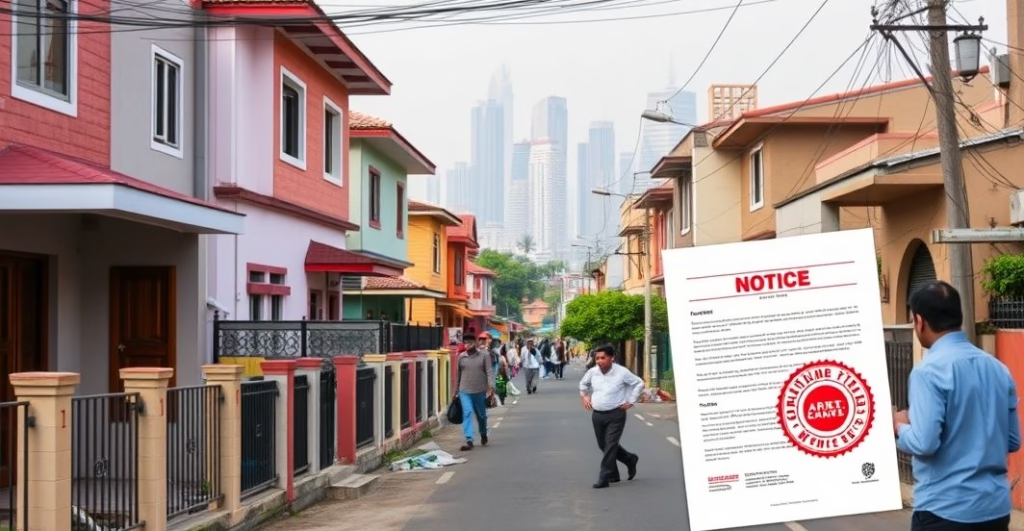
The plot was allotted under GNIDA’s institutional farmhouse scheme in 2011 for approximately Rs 103 crore. The developer paid an initial premium of about Rs 20.6 crore but could not complete later instalments amid contested land acquisition proceedings and prolonged litigation over title and possession. GNIDA treated the developer as a chronic defaulter and cancelled the allotment in 2017 after outstanding dues ballooned on paper.
The company argued that acquisition-related litigation — including multiple High Court and Supreme Court rulings — created a period of legal uncertainty from July 2011 through October 2016, during which reciprocal performance (execution of the lease deed and handing over possession) was not possible. The court accepted that the zero-period claim needed a reasoned decision and quashed the 2017 cancellation order.
Key legal outcomes
- Restoration of the allotment: The allotment to SDS Infratech stands restored effective immediately.
- Zero-period review: GNIDA has been ordered to place the zero-period relief claim before its standing committee and decide within four months.
- Reciprocal performance principle affirmed: The court reiterated that installation liabilities cannot be enforced where reciprocal performance (lease deed execution and possession) was prevented by legitimate litigation or title disputes.
Market and development implications
This ruling reinforces the importance of careful title verification and contract conditions when large institutional or farmhouse parcels are acquired. Developers and investors should note how judicial scrutiny can reverse long-standing administrative decisions, restore assets, and reopen commercial possibilities for stalled projects.
For buyers and investors evaluating projects across the NCR, including Greater Noida, consider robust pre-purchase checks and legal strategies. If you are an NRI evaluating land opportunities or large allotments, read this primer on legal due diligence for NRI property buyers in India to understand title, acquisition risk and compliance steps that can prevent years of litigation.
Why infrastructure context matters
Land value and project viability in Greater Noida are strongly influenced by infrastructure and connectivity. Expansion of metro corridors and transit links can turn previously marginal tracts into high-demand zones. If you want to explore where infrastructure growth is creating premium residential and luxury pockets, see our coverage of Delhi Metro expansion: luxury property hotspots, which highlights how transit corridors alter demand dynamics.
Practical advice for developers and investors
- Document everything: Keep a clear paper trail of payments, notices, and correspondence with authorities; courts often examine procedural fairness and timing.
- Link contractual obligations to possession and lease deed execution: Where possible, make instalments contingent on reciprocal performance to mitigate enforcement risk during title disputes.
- Engage local counsel early: Complex allotments and acquisition litigation require specialist guidance to quantify periods of legal disability and to press zero-period claims promptly.
To align your real estate strategy with foreseeable legal and market shifts, consider broader long-term planning resources such as future-proof your wealth in Indian real estate in 2026, which discusses diversification, regulatory risk and infrastructure-led value creation.
What developers should watch next
GNIDA must place the zero-period request before its standing committee and issue a reasoned order. That decision will determine whether instalment liabilities are recalculated, whether deposits or adjustments are required, and how the restored allotment can proceed toward lease deed execution and development. Stakeholders should also monitor possible settlement negotiations, the authority’s accounting of dues, and any fresh timelines set for possession and construction.
Conclusion
The Allahabad High Court’s decision is a timely reminder that administrative cancellations are not always final when contested titles and acquisition litigation are involved. For the investor, developer or buyer active in Greater Noida and adjoining micro-markets, legal preparedness and an eye on infrastructure evolution will be critical to capture value and manage risk.
Note: This post summarizes legal and market developments; it does not constitute legal advice. Consult qualified professional counsel for case-specific guidance.
This article was auto-generated as part of a smart content campaign powered by Growwh.com. Curious how we do it? Chat with us to learn more about our content automation systems.