
Auto-published by Growwh – a smarter way to scale content and marketing. Want to know more? Chat with us.
TL;DR: Adani’s NCLT-approved Rs 14,535-cr plan for JAL helps clear debt but doesn’t resolve land-allotment disputes. A Supreme Court verdict will decide Jaypee Sports City’s fate and thousands of homebuyers’ outcomes.
Affected buyers should preserve documents, join buyer committees and consult legal advisors while tracking court orders.
Overview
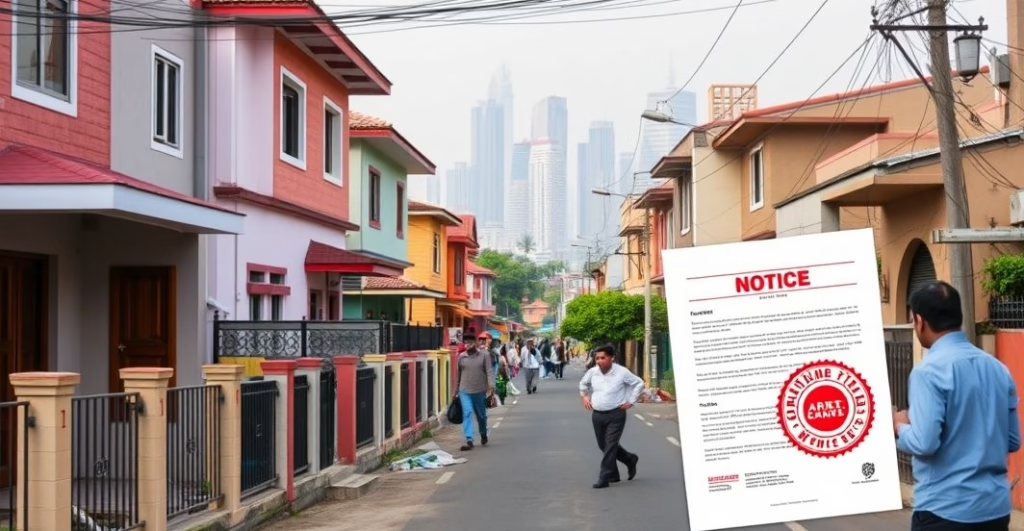
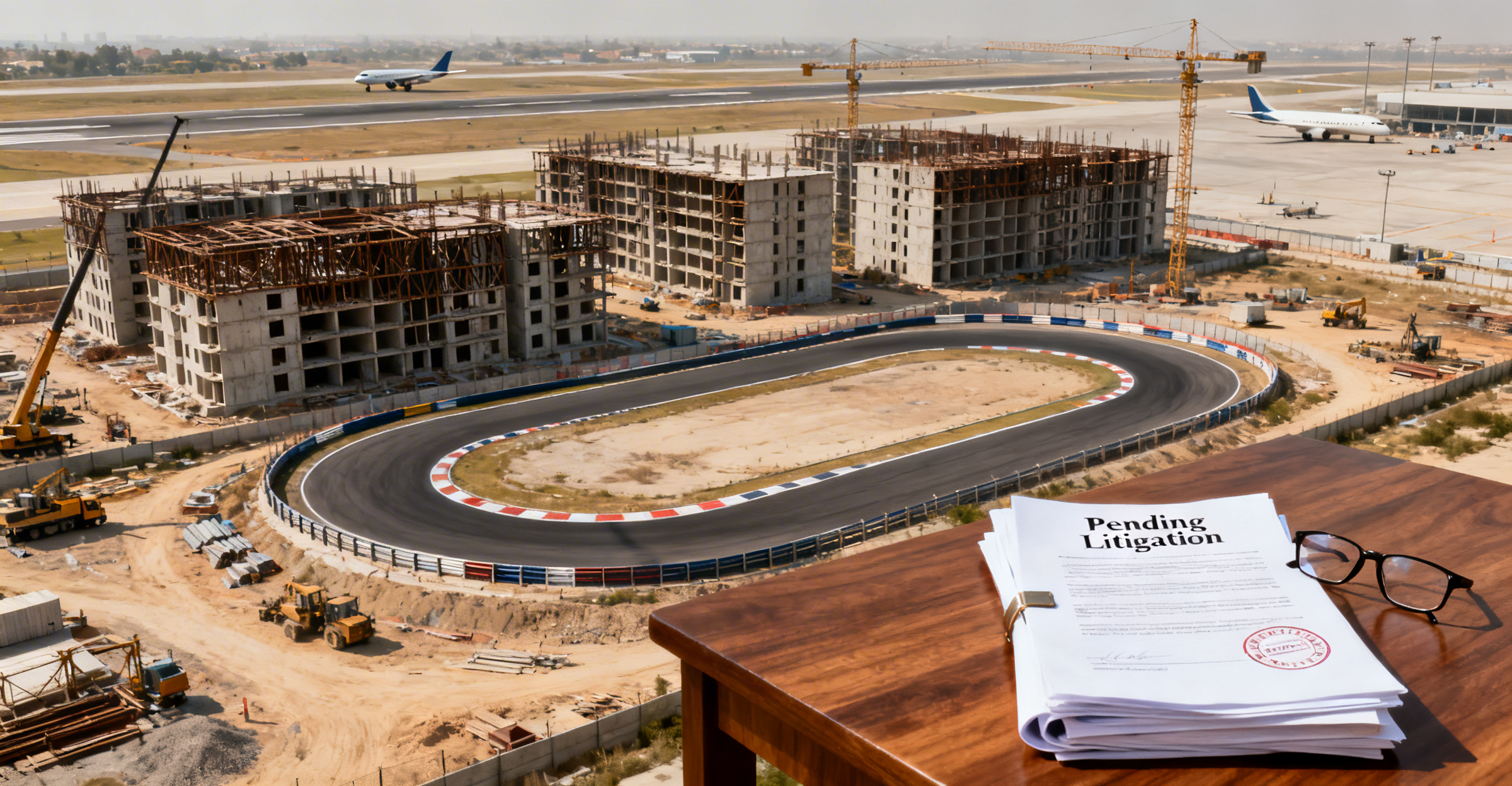
The National Company Law Tribunal (NCLT) has approved Adani Enterprises’ Rs 14,535-crore resolution plan for Jaiprakash Associates Ltd (JAL). Yet the stalled Jaypee Sports City township near the upcoming Noida International Airport remains caught in legal limbo. Thousands of homebuyers who invested between 2010 and 2014 still face uncertainty because a Supreme Court hearing will determine whether the Yamuna Expressway Industrial Development Authority (YEIDA) lawfully cancelled JAL’s 1,000-hectare land allotment in 2020.
What led to the dispute?
The Jaypee Sports City project was launched as a large integrated township anchored by a Formula 1 circuit, multiple residential clusters and commercial zones. Project execution stalled after the developer defaulted on payments to lenders and the Authority. YEIDA cancelled the allotment in February 2020 citing unpaid dues and failure to develop the designated Special Development Zone (SDZ). In March 2025 the Allahabad High Court upheld that cancellation and directed YEIDA to take steps to complete incomplete housing projects under existing agreements with homebuyers. JAL has appealed, and the Supreme Court will now decide the final outcome.
Who is affected?
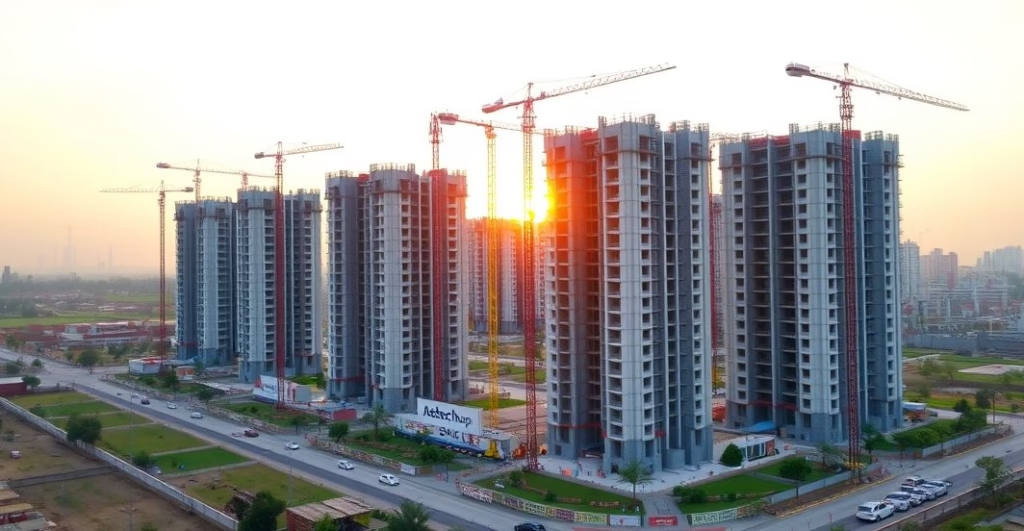
About 4,600 direct investors purchased homes across multiple projects launched by JAL inside the YEIDA SDZ. Several other projects were started by third-party developers on land sub-leased by JAL, bringing the total number of affected families and buyers into the thousands. High-profile projects in question include Jaypee Greens Bougainvilleas, Country Homes, Greencrest Homes, Krowns, Kove, Buddh Circuit Studios, Kassia I–III, Sportsville and Villa Expanza.
Why the NCLT approval doesn’t resolve everything
Adani Enterprises’ resolution plan addresses a large portion of JAL’s outstanding financial liabilities and is an important step in resolving corporate insolvency. However, the legal status of the land allotment and the Authority’s right to cancel allocation on account of defaults are separate legal questions. Until the Supreme Court rules on YEIDA’s cancellation, the ownership and right to complete or reassign the real estate assets remain in doubt. This means project completion timelines and transfer of possession are still unclear for buyers.
Immediate implications for homebuyers
- Possession and completion timelines are suspended pending the Supreme Court decision.
- Buyers must track both insolvency resolution proceedings and the parallel land-allotment litigation.
- Even with a successful corporate resolution, the Authority’s decision on land allotment could block or delay project handovers.
Practical steps buyers should take now
If you are an affected buyer, consider the following actions to protect your interest:
- Collect and digitize all purchase agreements, allotment letters, receipts and correspondence with the developer and YEIDA.
- Monitor court orders and timelines for both the NCLT insolvency resolution and the Supreme Court hearing.
- Engage with the project welfare society or buyer committees to coordinate group communication and legal strategy.
- Consult specialized legal and real estate advisors to understand possible outcomes and recovery options.
Non-resident Indians (NRIs) with exposure to such stalled projects should pay special attention to regulatory and repatriation rules. For a focused checklist and compliance tips, refer to Legal due diligence for NRI property buyers in India which outlines critical documentation and legal safeguards NRIs should pursue.
How developers, authorities and buyers can move forward
Resolution typically requires coordination between the resolution applicant, lending banks, the authority that issued the land allotment and buyer groups. Possible pathways include:
- YEIDA completing projects under its March 2025 direction if the courts endorse that approach.
- The resolution applicant (now Adani Enterprises) being allowed to take control of specific assets, subject to clearing statutory dues.
- Structured handover plans where remaining work is financed by the resolution applicant or alternate developers under supervision.
Buyers seeking long-term guidance on investing or exiting stressed real estate assets can explore advisory resources such as NRI Realty Edge: guidance for NRIs investing in Indian real estate, which covers investment frameworks, documentation and dispute-avoidance strategies.
What to watch next
Key milestones to monitor:
- Supreme Court hearing and its judgment on YEIDA’s cancellation order.
- Implementation pathway announced by Adani Enterprises and its lenders for JAL’s real estate assets.
- Any directions from YEIDA or district authorities about takeover or completion mechanisms for stalled projects.
Where to get ongoing analysis and updates
For regular analysis on stalled projects, insolvency resolutions and policy developments that affect buyers and investors, follow specialist publications and industry blogs. A curated collection of expert commentary and case studies is available at PropTrust Blogs for real estate insights, which tracks legal rulings, project status updates and buyer protections.
Final takeaways
Adani’s NCLT-approved resolution plan is a major development in the Jaiprakash Associates insolvency saga, but it is not an automatic fix for stalled townships like Jaypee Sports City. The Supreme Court’s decision on YEIDA’s land-allotment cancellation will be decisive for the project’s future and for thousands of homebuyers. Until then, affected buyers should preserve documentation, coordinate with buyer groups, seek professional legal advice and monitor both the insolvency and land-allotment cases closely.
This article was auto-generated as part of a smart content campaign powered by Growwh.com. Curious how we do it? Chat with us to learn more about our content automation systems.