
Auto-published by Growwh – a smarter way to scale content and marketing. Want to know more? Chat with us.
TL;DR: UP’s policy lets societies with 1,500+ sqmt redevelop if two‑thirds owners agree. Incentives include 50% development charge rebate, extra FAR and stamp duty waiver.
How Uttar Pradesh’s redevelopment policy unlocks vacant society space
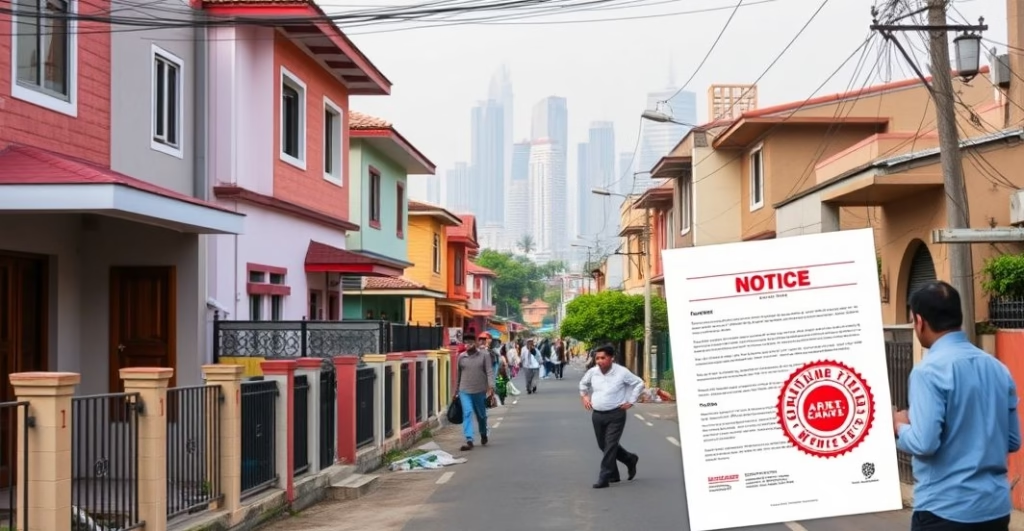
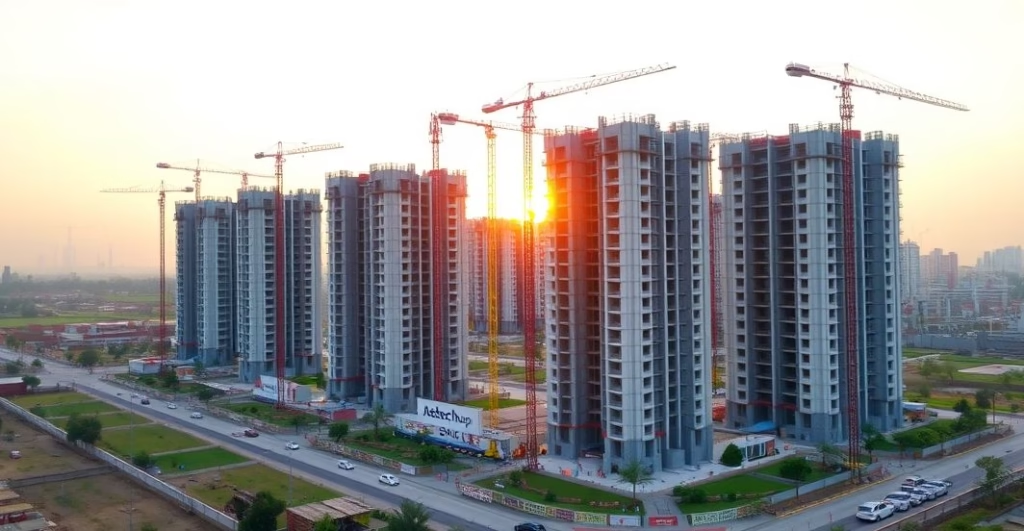
Uttar Pradesh has introduced a redevelopment policy that allows apartment owners to convert underutilised open space within housing societies into larger, modern residential units. The policy targets layouts larger than 1,500 sqmt (16,146 sq ft) where two-thirds or more apartment owners consent to redevelopment. It aims to unlock prime urban space in cities such as Lucknow, Ghaziabad, Kanpur and Varanasi by encouraging private developers to partner with society owners.
Why this matters for homeowners and developers
Many housing compounds built decades ago still have vacant pockets that can be better optimised. Under the new rules, redevelopment becomes financially viable through a suite of incentives: the local housing development authority will provide a 50% rebate on development charges, offer additional FAR (floor area ratio) above the base, exempt shelter fees, and allow upgrades to commercial or mixed land use where appropriate. The state government has also announced stamp duty exemptions for qualifying projects.
Key eligibility and consent rules
- Layout size: the policy applies to residential layouts over 1,500 sqmt (approx. 16,146 sq ft).
- Owner consent: redevelopment can proceed if at least two-thirds of apartment owners agree to the plan.
- Site types: authorities will evaluate freehold, leasehold, nazul and government‑owned parcels that are under‑utilised in congested urban areas.
- Localities: in cities like Lucknow, pockets such as Clay Square, Mall Avenue, AP Sen Road, Mahanagar and Aliganj are expected to benefit.
Incentives that make redevelopment attractive
- 50% rebate on development charges to reduce project cost.
- Additional FAR to allow larger built-up areas and better apartment layouts.
- Stamp duty exemptions for qualifying redevelopment projects.
- Permission to convert to commercial or mixed land use in suitable cases, improving returns for stakeholders.
- No shelter fees levied by local authorities for eligible projects.
Which sites can be identified for redevelopment?
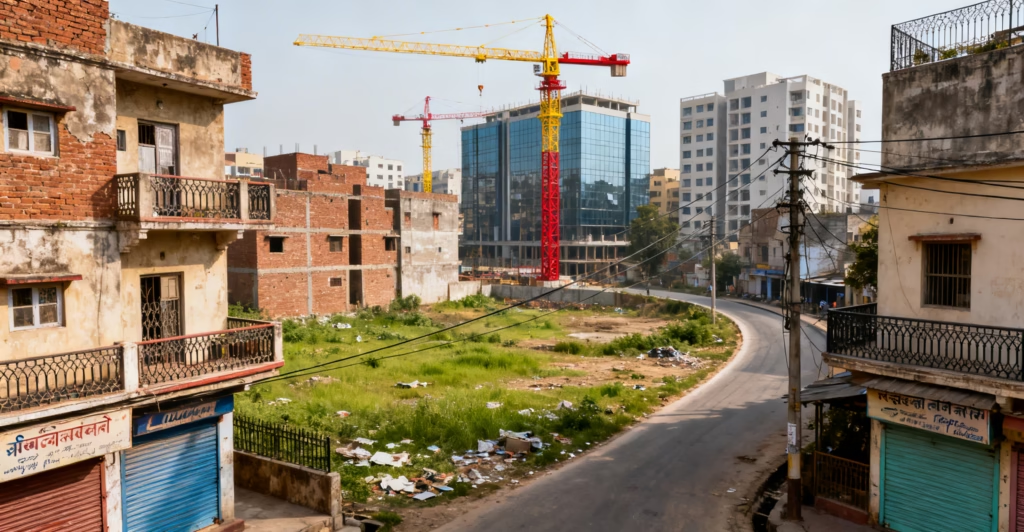
Authorities will undertake mapping of underused parcels in congested areas — from bus shelters and old government buildings to closed industrial units, heritage hotels, hospitals, offices and workshops with excess land. These may be redeveloped either by internal society-led projects or through partnerships with private developers.
Steps for societies considering redevelopment
- Assess site area and ownership status to confirm eligibility (1,500+ sqmt and owner consent threshold).
- Engage architects and planners to draw redevelopment layouts that maximise FAR and ensure compliance with building norms.
- Invite developer proposals or form a cooperative redevelopment agreement with clear revenue-sharing models.
- Secure statutory approvals from the relevant housing development authority; 29 such authorities are in the process of incorporating the policy across key UP cities.
- Complete legal checks and documentation before construction begins.
Legal and financial due diligence — don’t skip this
Redevelopment can be lucrative but complex. Societies and buyers — including NRIs considering investments — should complete thorough legal due diligence to verify title, ownership transfers, and compliance with local rules. For a practical checklist and guidance tailored to non-resident investors, see Legal due diligence for NRI property buyers in India.
How to stay updated and learn more
Policy frameworks and market dynamics evolve quickly. For ongoing policy analysis and market perspectives on real estate regulation and redevelopment, bookmark PropTrust Blogs: real estate policy and market insights. If you’re planning long-term investments or want a bigger-picture outlook, consider reading resources that project how the Indian real estate landscape may shift in the coming years, such as Future-Proof Your Wealth: Indian real estate in 2026.
Benefits and potential challenges
Benefits: better housing stock, higher property values, efficient land use in congested areas, and attractive returns for developers and owners due to incentives.
Challenges: reaching consensus among owners, negotiating fair redevelopment deals, managing temporary relocation during construction, and ensuring transparent contractor and developer agreements. Strong governance, clear legal documentation and professional project management are essential.
Final takeaway
Uttar Pradesh’s redevelopment policy unlocks a path to modernise aging apartment complexes and utilise vacant compound space across many cities. With targeted incentives and a clear consent framework, the policy can deliver upgraded housing, improved urban land use and fresh investment opportunities — provided societies pursue careful planning and legal due diligence.
This article was auto-generated as part of a smart content campaign powered by Growwh.com. Curious how we do it? Chat with us to learn more about our content automation systems.