
Auto-published by Growwh – a smarter way to scale content and marketing. Want to know more? Chat with us.
TL;DR: UP approves a redevelopment policy to unlock prime urban land and streamline private redevelopment approvals.
Development fees will be rationalised to boost core-city density and make peripheral housing more affordable.
What the UP redevelopment policy means for cities and residents
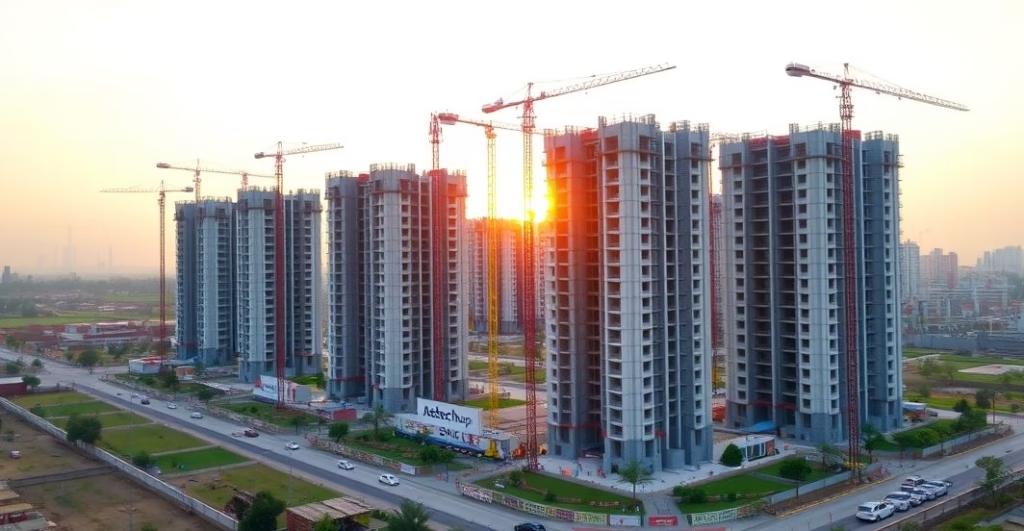
The Uttar Pradesh government’s 2026 redevelopment policy provides a clear roadmap to unlock underutilised prime urban land and accelerate planned urban renewal. By guiding housing development authorities on how to process applications from private developers and by rationalising development fees, the policy aims to transform dilapidated blocks into safe, higher-density, and more affordable housing while encouraging responsible private investment.
Why this policy matters
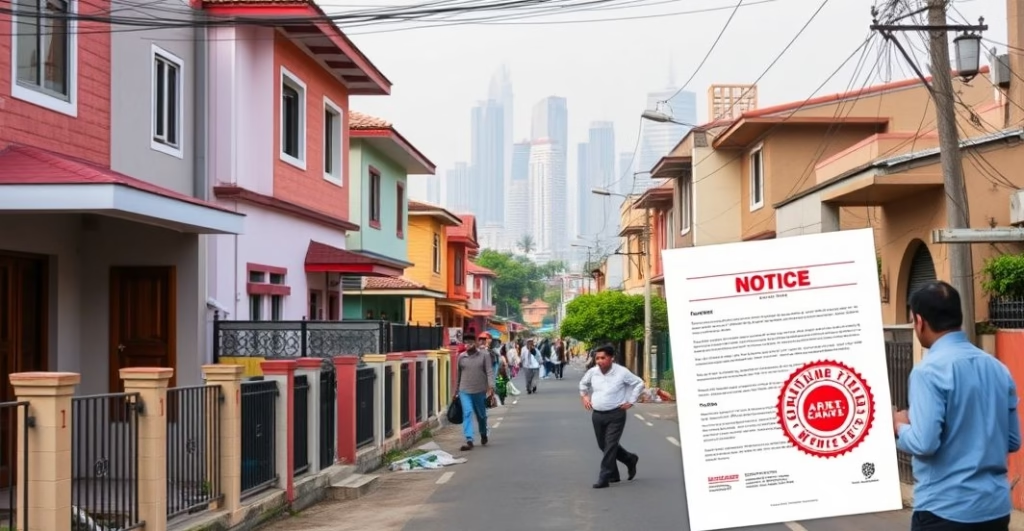
Many prime-location buildings remain underutilised due to disputes, lack of resources, poverty, or structural degeneration. Tenants are often forced to live in unsafe conditions because redevelopment pathways were unclear. The policy addresses these issues by enabling private players to consult with stakeholders, prepare redevelopment proposals, and submit them for formal examination and consent by housing authorities. The result: faster project approvals, better living conditions, and more efficient land use in core cities.
How the process will work
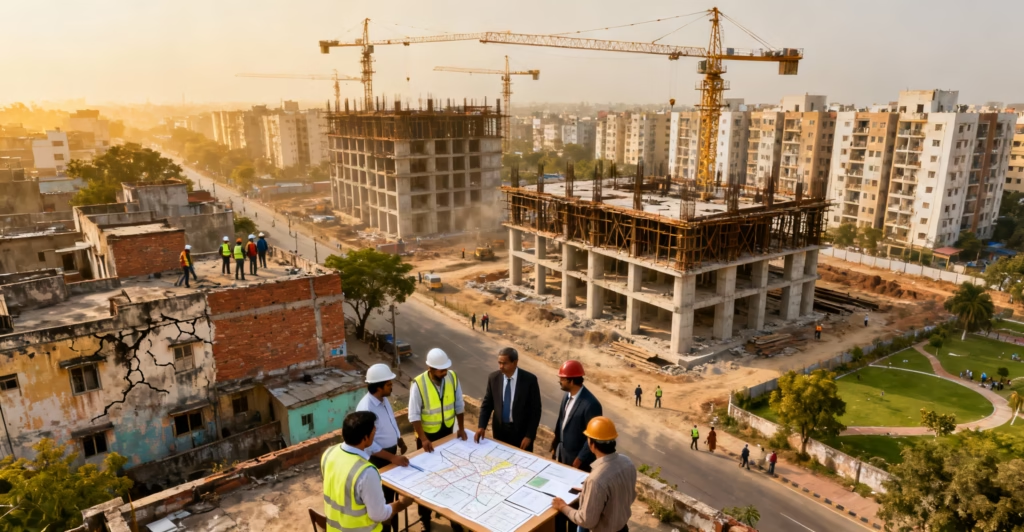
- Stakeholder consultations: Private developers get the option to engage residents, tenants, and local bodies to build consensus before filing applications.
- Proposal submission: Detailed redevelopment plans are presented to housing authorities for technical, legal, and social vetting.
- Authority review and consent: Authorities examine all aspects, including clearances, rehabilitation plans and tenure issues, before granting approvals.
- Fee rationalisation: Revised development fees are expected to promote higher density in core areas while keeping peripheral projects affordable.
Expected benefits for cities
The policy is designed to create multiple urban benefits:
- Safer, modern housing for occupants of dilapidated buildings.
- Increased housing supply in central locations through higher permissible densities.
- Better utilisation of prime land that currently sits idle or underused.
- More predictable rules for developers, which should reduce delays and legal friction.
What developers and investors should watch
Developers should prepare for a more consultative approval process that rewards creative, inclusive proposals. Projects that combine housing with retail, offices, and community amenities will be especially attractive in the new environment. Examples of project types and locations that align with redevelopment goals include Nirala Gateway – Retail, Studio & Office Spaces in Noida Extension, Forest Walk Villas in Dasna, Ghaziabad, and Max Estates – Premium Mixed-Use Development in Noida Sector 105. These illustrate how modern mixed-use formats and peripheral affordability can coexist under a cohesive redevelopment framework.
Impacts of development fee rationalisation
Rationalised development fees are a key lever in the policy. By adjusting fee structures the government intends to:
- Encourage higher floor-area ratios (FAR) and increased density within core urban areas, making redevelopment financially viable.
- Lower effective costs for projects on outskirts and peripheries so local populations can access more affordable housing options.
- Reduce informal sprawl by promoting compact, serviced redevelopment over unplanned expansion.
Guidance for residents and tenant groups
Residents and tenant associations should take an active role in consultations. Key actions include:
- Demand transparent rehabilitation and allotment plans in any redevelopment proposal.
- Seek legal clarity on tenure, temporary relocation, and compensation terms before agreeing to redevelopment plans.
- Work with local housing authorities to ensure proposals meet social and safety commitments.
Risks and mitigations
Redevelopment can bring challenges if not managed carefully. Common risks include inadequate rehabilitation guarantees, opaque land-title issues, and cost escalations. Mitigation measures include stringent authority vetting, mandatory rehabilitation bonds or escrow accounts, and public disclosure of project terms prior to final approval.
Practical checklist for a redevelopment proposal
- Comprehensive structural and title study of the property.
- Stakeholder consultation record and consent framework.
- Feasibility showing FAR use, parking, utilities, and green space plans.
- Rehabilitation and resettlement plan with timelines and budgets.
- Clear financial model that factors revised development fees and incentives.
Timeline and next steps
With government approval in place, housing departments will issue detailed operational guidelines and fee schedules. Developers and resident groups should monitor local housing authority notices and begin preparatory surveys and consultations. Projects that align with the policy’s objectives—higher density in core areas and affordability at the periphery—are likely to receive priority processing.
Conclusion
The UP redevelopment policy is a strategic step to unlock latent urban value while improving living conditions for many residents. By combining stakeholder consultation, a structured approval process, and rationalised development fees, the policy aims to catalyse responsible redevelopment that benefits cities, developers, and communities alike.
This article was auto-generated as part of a smart content campaign powered by Growwh.com. Curious how we do it? Chat with us to learn more about our content automation systems.