
Auto-published by Growwh – a smarter way to scale content and marketing. Want to know more? Chat with us.
TL;DR: UP enforces Aadhaar-based property registration from Feb 1, 2026 using e-KYC, biometrics and e-sign to curb land scams. The digitisation of 2002–2017 records is extended by six months.
What’s changing in Uttar Pradesh property registration
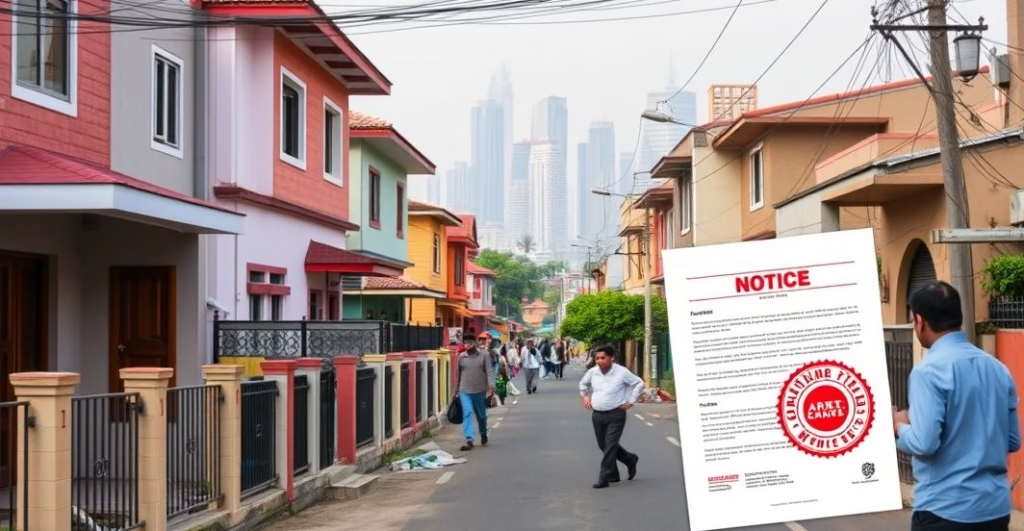
From February 1, 2026, Uttar Pradesh will implement an Aadhaar-based authentication system for all property registrations across sub-registrar offices. The new process uses electronic KYC (e-KYC), biometric verification and e-signatures to authenticate executants, parties and witnesses at the time of deed registration. The move is designed to strengthen identity verification, reduce impersonation and prevent land-related fraud.
Why this matters for buyers, sellers and real estate professionals
- Greater fraud prevention: Biometric and e-KYC screening makes it harder for impostors to register properties using fake documents.
- Faster verification: Electronic authentication reduces manual checks and speeds up the registration workflow.
- Transparent records: Digital authentication trails and e-signatures provide clearer audit trails for each registration.
- Better due diligence: Buyers and agents can rely on improved verification at sub-registrar offices to cross-check sellers’ identities.
Digitisation of old documents — extended but nearly complete
The state has also extended its project to digitise older property documents (registered between 2002 and 2017) by six months. The initiative, originally approved with a budget and later expanded, reports high completion rates: approximately 99.11% indexing and 98.37% scanning are already done. Outstanding work remains in a few districts including Etah, Varanasi, Moradabad, Mainpuri, Lucknow, Aligarh, Hathras, Agra, Saharanpur and Prayagraj.
How the Aadhaar-based system will work
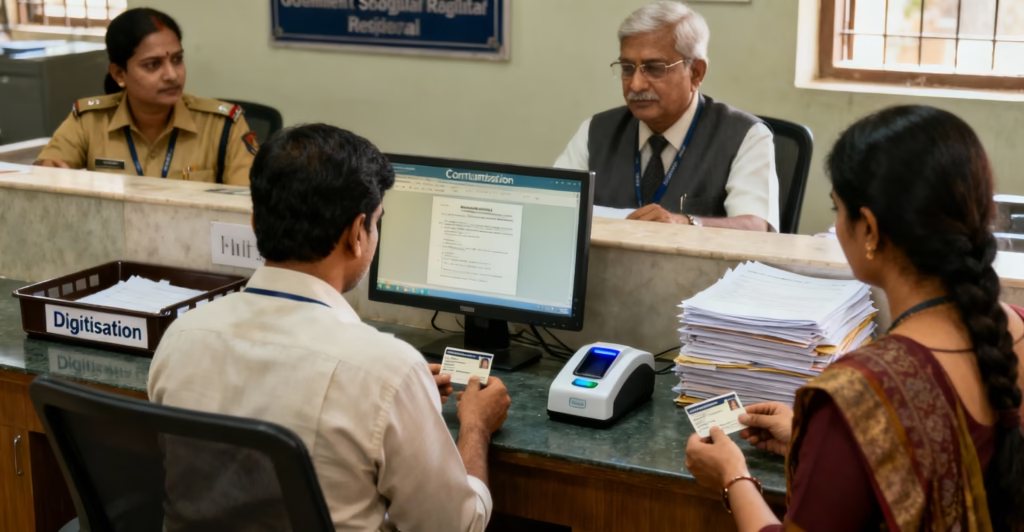
At registration counters, parties and witnesses will be asked to authenticate using their Aadhaar-linked credentials. Typical steps include:
- Initiating e-KYC using the Aadhaar number.
- Biometric verification (fingerprint or iris) via sanctioned devices at the sub-registrar office.
- Applying an e-signature to the deed once identity is validated.
This sequence ensures the person signing the deed is the same Aadhaar-holder whose identity was verified electronically, reducing impersonation risks.
Practical tips for buyers and property investors
- Carry your Aadhaar and linked mobile number: e-KYC often requires OTPs sent to the mobile number registered with Aadhaar.
- Verify Aadhaar linkage: ensure your Aadhaar data (mobile number, name spelling, biometrics) is up to date before visiting the sub-registrar office.
- Request certified digital copies: where available, ask for digitally certified documents to reduce future disputes.
- Confirm sub-registrar readiness: while the rollout is statewide, confirm your local office’s processes and device readiness to avoid delays.
What developers and commercial buyers should know
Commercial and retail property transactions will follow the same Aadhaar-enabled authentication process. Investors in retail high-street and mall developments should note the added layer of verification that will accompany deed registration. If you are researching retail or office opportunities, consider properties with transparent title records and verified registration histories — for example, active projects offering retail and office spaces in Noida and Noida Extension. Browse curated options such as Nirala Gateway Noida Extension retail & office spaces, Sikka Mall of Noida retail & office spaces on Noida Expressway, and IThum 127 high-street retail & office spaces Noida Sector 127 as examples of commercial inventory where title clarity and registration processes are essential considerations.
Impact on reducing land scams
The Aadhaar-based approach addresses a common fraud vector: fake or forged identities used during registration. Because the process ties the registration act to biometric authentication and an e-sign, successful impersonation becomes much more difficult. Increased transparency, combined with the digitised archive of older documents, will make it easier for authorities and buyers to trace title history and detect anomalies.
Potential challenges and what to watch for
- Privacy and consent: Aadhaar-based checks must adhere to data-protection and consent norms; parties should understand what data will be used and stored.
- Technical readiness: Some sub-registrar offices or districts may face hardware, connectivity or training gaps during early rollout — expect transitional delays in a few locations.
- Dispute resolution: Digitisation helps, but disputes over older titles may still require legal resolution if records show inconsistencies.
Quick checklist before you register a deed
- Confirm Aadhaar details and linked mobile number.
- Carry original identity proofs and supporting sale documents.
- Ask the sub-registrar office about biometric devices and e-sign process.
- Get digitally certified copies where possible and keep an audit trail of the e-KYC/e-sign process.
Frequently asked questions
Will Aadhaar be mandatory for all registrations? Yes — the new rules implement Aadhaar-based identity verification for parties and witnesses during registration.
Does digitisation mean all older documents are now searchable online? Most indexing and scanning is complete, but some records in specific districts are still pending. The extension aims to finalise remaining work and improve accessibility.
Will this slow down registration at first? There may be short transitional delays while offices adopt new hardware and workflows, but the overall intent is faster, more secure registrations once systems stabilise.
Closing thoughts
The Aadhaar-based property registration rollout in Uttar Pradesh marks a significant step toward secure, transparent real estate transactions. Buyers, sellers and developers should use this change as an opportunity to strengthen due diligence practices and rely on digitised records. For investors exploring retail and office opportunities, prioritise projects with clear title histories and documented registrations as part of your evaluation.
This article was auto-generated as part of a smart content campaign powered by Growwh.com. Curious how we do it? Chat with us to learn more about our content automation systems.