
Auto-published by Growwh – a smarter way to scale content and marketing. Want to know more? Chat with us.
TL;DR: New UP rule: projects of 10+ acres must reserve 1% land for waterbodies (≈2m deep) to recharge groundwater and recycle non-potable water.
Green spaces must limit concrete to 5% and use permeable surfaces for walkways and jogging tracks.
Uttar Pradesh mandates waterbodies in large real estate projects
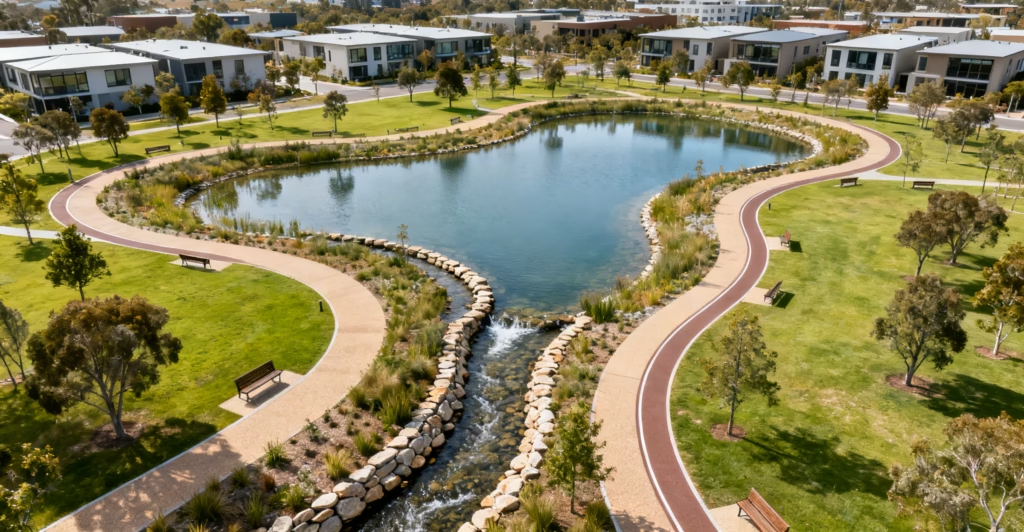
The Uttar Pradesh housing department has introduced a key regulation that affects residential, commercial and mixed-use developments spanning 10 acres or more: developers must reserve 1% of the total project area for a dedicated waterbody. The measure is designed to recharge groundwater, capture surface runoff and recycle non-potable water for uses like cleaning, irrigation and dust suppression. The policy also specifies a recommended depth of about 2 m for these reservoirs and advises using geomatics and land survey expertise to locate them at natural low points so they attract runoff effectively.
Materials, landscaping and permeable surfaces
Alongside the waterbody requirement, the order restricts the use of concrete in parks and green areas: no more than 5% of the designated green cover may be covered with concrete or concrete mix. Jogging tracks, walkways and other pedestrian surfaces within compounds must use permeable materials to allow seepage and reduce the urban island effect. These design standards push projects toward softer landscaping, more tree canopy, and surface finishes that enhance infiltration rather than channeling water away.
Why this matters: environmental and urban benefits
- Groundwater recharge: On-site reservoirs capture and percolate water back into aquifers, addressing falling water tables in urban and peri-urban areas.
- Reduced urban runoff: Diverting overflow from car washes, mopping and irrigation into a reservoir reduces load on drains and lowers flood risk during heavy rains.
- Water reuse: Collected water can be treated and reused for non-potable applications—landscaping, street cleaning and dust suppression—cutting potable water demand.
- Climate comfort: Less heat retention from concrete and more open water and green surfaces help mitigate the urban island effect.
How developers can comply and design effectively
Successful implementation requires early-stage planning. Developers should commission topographic surveys and geomatics studies to position the waterbody where it naturally collects runoff. Design considerations include a minimum 2 m depth, lined basins where necessary to prevent contamination, and overflow management to handle peak storm events. Integrating rainwater harvesting infrastructure with the reservoir and specifying permeable paving for pathways and jogging tracks will maximize infiltration and reuse.
Maintenance and regulatory checks
Long-term benefits depend on proper operation: reservoirs must be included in routine maintenance schedules for de-silting, weed control and water quality checks for non-potable reuse. Developers should document water balance estimates, source-to-reservoir routing and treatment steps to satisfy municipal clearance and demonstrate compliance when submitting layout plans.
Implications for projects and buyers
For prospective buyers and investors, the new norms are likely to raise the environmental performance and liveability of large developments. Mixed-use and premium projects that already emphasize open spaces and sustainability will find easier alignment with the rule. Examples of developments that emphasize integrated amenities and green planning include Nirala Gateway: Retail, Studio & Office Spaces in Sector 12, Noida Extension, Max Estates: Premium Mixed-Use Development in Sector 105, Noida, and thoughtfully landscaped villa communities such as Forest Walk Villas: 4 BHK Luxury Villas along NH-24, Dasna, Ghaziabad. Buyers can expect projects to advertise groundwater recharge features, water recycling capacity and reduced hardscape footprints as value-added amenities.
Design checklist for developers (quick)
- Allocate 1% of project area for a waterbody; target ~2 m depth where feasible.
- Use geomatics/topographic surveys to place reservoirs in natural low zones.
- Integrate rainwater harvesting and green infrastructure routing.
- Limit concrete in green areas to 5% of the park/green cover footprint.
- Specify permeable paving for walkways, tracks and peripheral paths.
- Plan maintenance, overflow safety, and non-potable treatment for reuse.
Conclusion
The new Uttar Pradesh directive aligns urban development with water-sensitive planning: reserving compact waterbodies, minimizing impermeable surfaces and reusing non-potable water will help developers reduce runoff, recharge aquifers and create cooler, more resilient neighbourhoods. Early incorporation of these elements into master plans will streamline approvals and enhance long-term asset value while supporting regional water security.
This article was auto-generated as part of a smart content campaign powered by Growwh.com. Curious how we do it? Chat with us to learn more about our content automation systems.